


Text: Maxi Media Communication
Image: Disclosure/Amaz
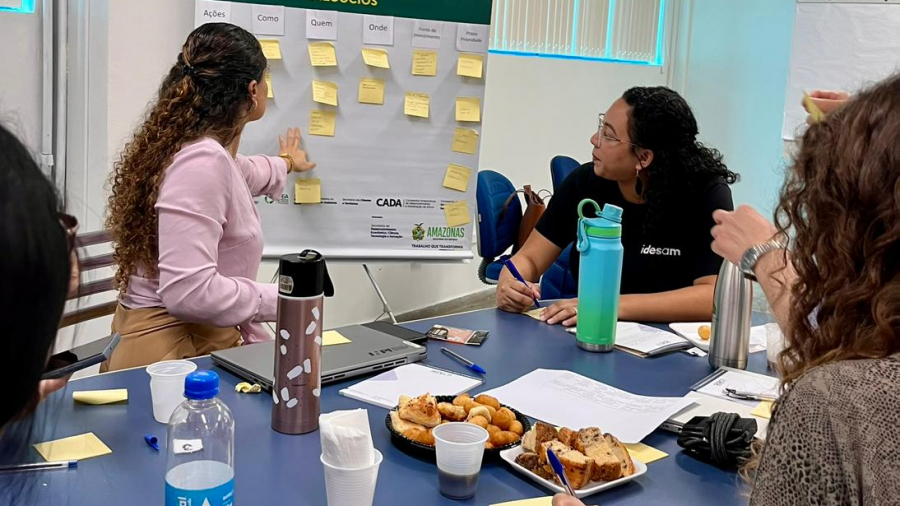
Amaz Aceleradora participated in the workshop for the construction of Amazonas Bioeconomy Action Plan, Promoted by the State Secretariat for Economic Development, Science, Technology, and Innovation (Sedecti). The meeting, held at the Amazon Biobusiness Center (CBA), discussed the plan's governance pillar with stakeholders from the public and private sectors, as well as social organizations.
The Amazonas State Bioeconomy Plan is a state government initiative that has been developed through participatory processes, including public consultations and direct dialogue with the 62 municipalities. The goal is to structure a development model that values the standing forest and sociobiodiversity, transforming natural resources into innovative economic and social solutions.
With five years of experience supporting businesses with socio-environmental impact in the Amazon, Amaz contributes to strengthening sustainable production chains and expanding access to investment and training for entrepreneurs in the region. The initiative's participation in this process reinforces the importance of integrating the perspective of those already working directly in the impact ecosystem into the formulation of public policies focused on the bioeconomy.
According to Gabriela Santos, New Business Leader at Idesam, the Amazon Institute for Conservation and Sustainable Development, which coordinates the Amaz Impact Accelerator, among other initiatives focused on strengthening New Businesses, the meeting represented a crucial step in the collective development of the State Bioeconomy Plan, which directly impacts the organization's operations, the supported businesses, and the entire impact ecosystem. The manager emphasized that Amaz's participation has been marked by collaboration throughout the entire process, especially in identifying challenges ranging from strengthening value chains to commercializing sociobiodiversity products.
"The exchange with representatives from the public, private, and third sectors ensures that the plan will be designed taking into account the experiences and lessons learned from each of these sectors, as well as opportunities for collective work, particularly in terms of policies and structures that enable and benefit the business ecosystem. In this way, we position ourselves as a key player in the implementation of the plan's definitions," he emphasized.
Discussions on the Bioeconomy Action Plan continue throughout this week. During this phase, participants will delve deeper into the debate surrounding the Plan's other pillars, which include topics such as decarbonization, renewable energy, people and culture, business ecosystems, and genetic heritage.
Biatris Rocha, advisor to the Department of Bioeconomy and Strategic Actions at Sedecti, highlighted the importance of the regional consultation process for the plan's success.
"Based on the regional consultations, which began in February, we will be able to incorporate the communities' perspectives, ensuring that the plan is not only technical, but also representative of local demands," Biatris stated.


Add a Comment