Text: Maxi Media Communication
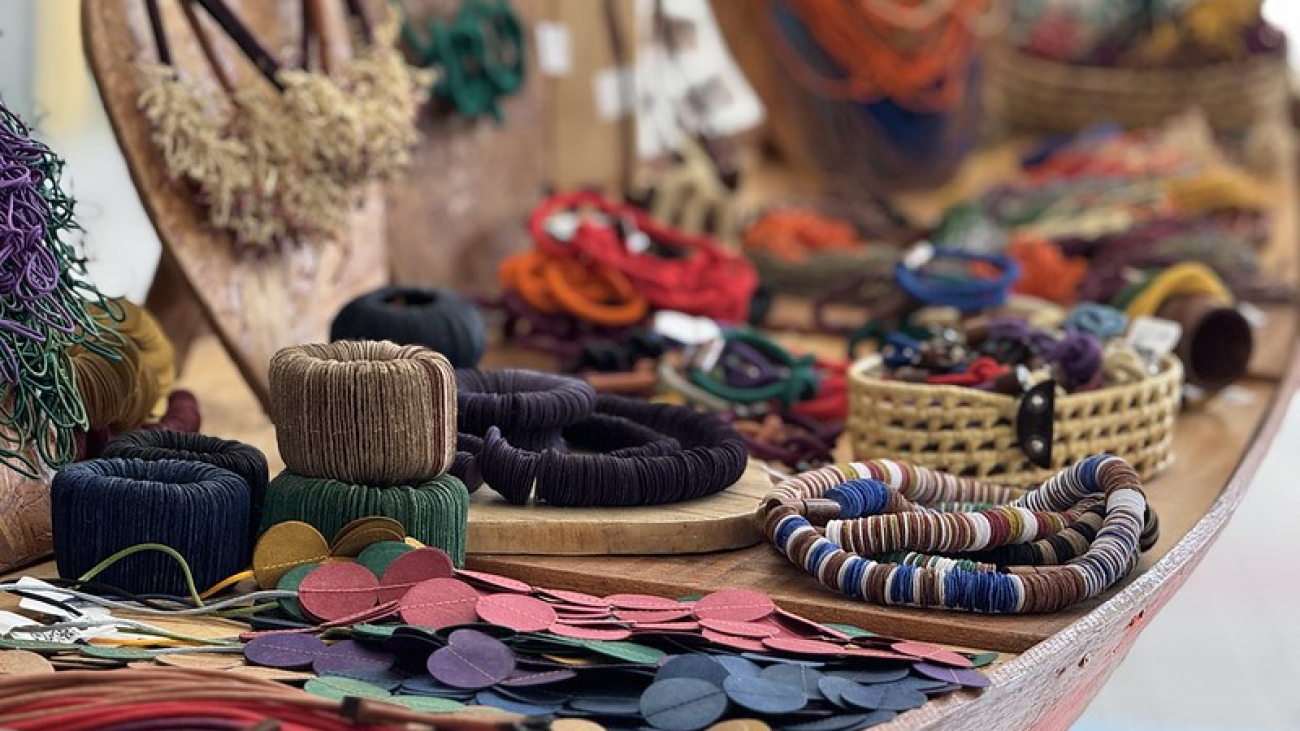
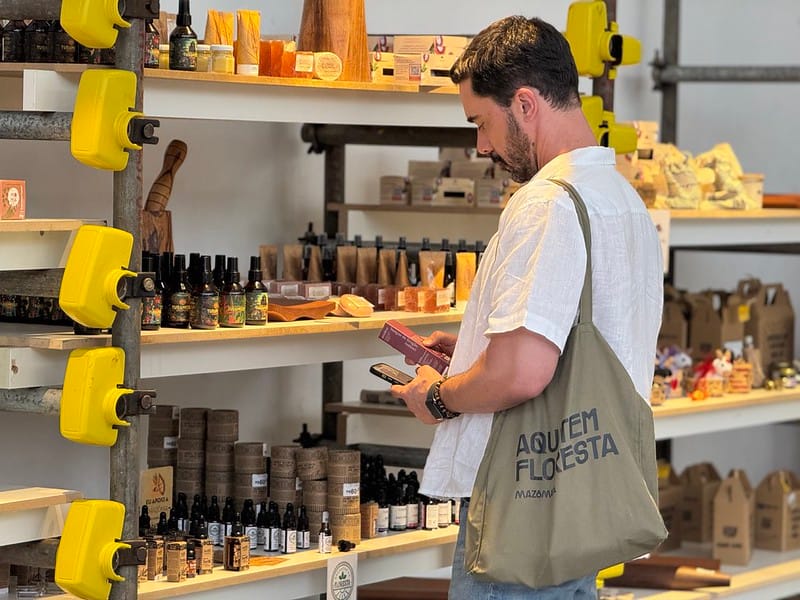
One of the main highlights of the Amazon Impact Investing and Sustainable Business Festival (FIINSA), a special COP30 edition, to be held on November 10, is the Amazon Market, a space that will bring together 50 brands from the rainforest, showcasing products and services. The event will take place at the Pará State University Center (CESUPA), Alcindo Cacela 2 Campus, in Belém, Pará.
The ventures participating in Mercado Amazônia are part of the portfolio of businesses supported by the “Lab de Impacto” acceleration program, run by Impact Hub Manaus, by AMAZ Aceleradora de Impacto, coordinated by Idesam, and will be curated by the Amazon Sociobioeconomy Business Association (ASSOBIO).
“"ASSOBIO brings together small and medium-sized companies committed to positive environmental, social, and economic impacts in the Amazon region. Participating in FIINSA is essential, as it reinforces our role in providing visibility and generating business opportunities for our members, in addition to strengthening partnerships with institutions that share this commitment. Our participation marks a new milestone that demonstrates the network's strength and growth, reaffirming our mission to value the economy of the standing forest," comments Carol VilaNova, head of ASSOBIO's events department.
These initiatives promote socio-environmental impact in different Amazonian territories, operating in segments such as food, biocosmetics, waste management, logistics, among others.
According to Marcus Bessa, founder of Impact Hub Manaus and one of the event organizers, Mercado Amazônia has established itself as an essential space for providing visibility and strengthening sociobioeconomy businesses.
According to him, with each edition of FIINSA, not only sales volume grows, but also connections between entrepreneurs, investors, and partners. Sales reached R$14,000 in the first edition (2019), R$62,000 in the second (2022), and R$115,000 last year—results that demonstrate the potential of Amazonian businesses to drive the economy and generate positive impacts.
“"FIINSA is a meeting point for those who dream, invest, and make the Amazon happen. We believe that every impactful business carries a seed of transformation, and our role is to create the right environment for these seeds to grow and become benchmarks for sustainability and innovation in the country. The more strategic players are connected, the better for the region," says Bessa.
In addition to the Amazon Market, FIINSA's program includes panels, discussion groups, cultural and gastronomic experiences, as well as community and networking spaces inspired by the Amazon rainforest. To learn more, visit fiinsa.org.br.
The 50 brands that will participate in the Amazon Market are: Biozer da Amazônia Ind., Darvore Cosmetics da Amazônia Ltda., Ekilibre Amazônia, Inatu, Moma, Rondônia Soap Factory, Tekohá Regenerative Cosmetics, Amazônia Agroforestry, Amazonique, Açaí Coffee Mill, Mahta Trade and Import of Natural Products Ltda., Mazo Mana, Tribo SuperFoods, Terramazonia, Amazônia Bee, Apoena Bioindustrial Ltda., Cacauaré, Jackfruit Meat, Chocobic Food Industry (Na Floresta), Cupu do Quintal, Deveras Amazônia, Jambu Sinimbu, JuCarepa, Manioca, Taberna da Amazônia, Zeno Nativo, Tucum, Urucuna Cosmetics and Crafts Ltda., Yanciã, Smartfoods, Mead, AMZ Tropical, Seiva, Bossa Pack, Da Tribu, Impact Bank, ForestiFi, Ubim Tourism, Paiter Museum Soe, Cacau Raiz, Yawa Studio, Dr. da Borracha, Mel Bonal, Aruanas, Sioduhi Studio, Encantos da Floresta, Wasai, among others.
More about FIINSA
The Amazon Impact Investing and Sustainable Business Festival (FIINSA) is organized by Idesam and Impact Hub Manaus, co-organized by CESUPA. It is sponsored by Fundo Vale, Soros Economic Development Fund, Bemol, CNP Seguradora, and Suframa's Priority Bioeconomy Program (PPBio). Support is provided by the Sabin Institute, Bezos Earth Fund, Carbon Disclosure Project (CDP), and the Amazon Investor Coalition. Partners include the Health and Happiness Project, the Amazon Sociobioeconomy Business Association (Assobio), the Amazonian Climate Network (RAC), the Amazon Entrepreneurship Center, the Alliance for Impact Investing and Business, the Sustainable Connections Institute (Conexsus), the Arapyaú Institute, and Casa Amazônia.
About Idesam
Idesam is an Amazonian organization operating in the Legal Amazon since 2004. Its mission is to promote the appreciation and sustainable use of natural resources in the Amazon and to seek alternatives for environmental conservation, social development, and climate change mitigation. Accredited as an Institute of Science and Technology, it is qualified as a Social Organization of Public Interest (OSCIP). Among the recognitions already received, it was named the best environmental organization in the North Region by the Best NGOs Award 2020 and 2023. It received the 2022 Social Entrepreneur Award, sponsored by Folha de São Paulo and the Schwab Foundation, in the "Innovation and Environment" category, and is accredited as an actor in the United Nations Decade of Ecosystem Restoration (2021-2030). To learn more, visit: www.idesam.org.
About Impact Hub Manaus
Impact Hub Manaus carries a deeply Amazonian identity. With 10 years of experience, the organization seeks to strengthen the region's impact entrepreneurship and innovation ecosystem by promoting acceleration programs, investments, community engagement, training, and events focused on the bioeconomy and social innovation. Since 2015, it has connected entrepreneurs, investors, social leaders, and partners. In its first decade, it built a community of over 500 members, supported over 3,000 entrepreneurs, invested in over 40 social businesses, mobilized over R$ 2 million in resources, and brought impact to more than 10 cities in the Legal Amazon. More than just results, the Hub represents a collective movement for an innovative, sustainable, and leading Amazon, where economic development goes hand in hand with environmental conservation and the empowerment of those who live in the region.