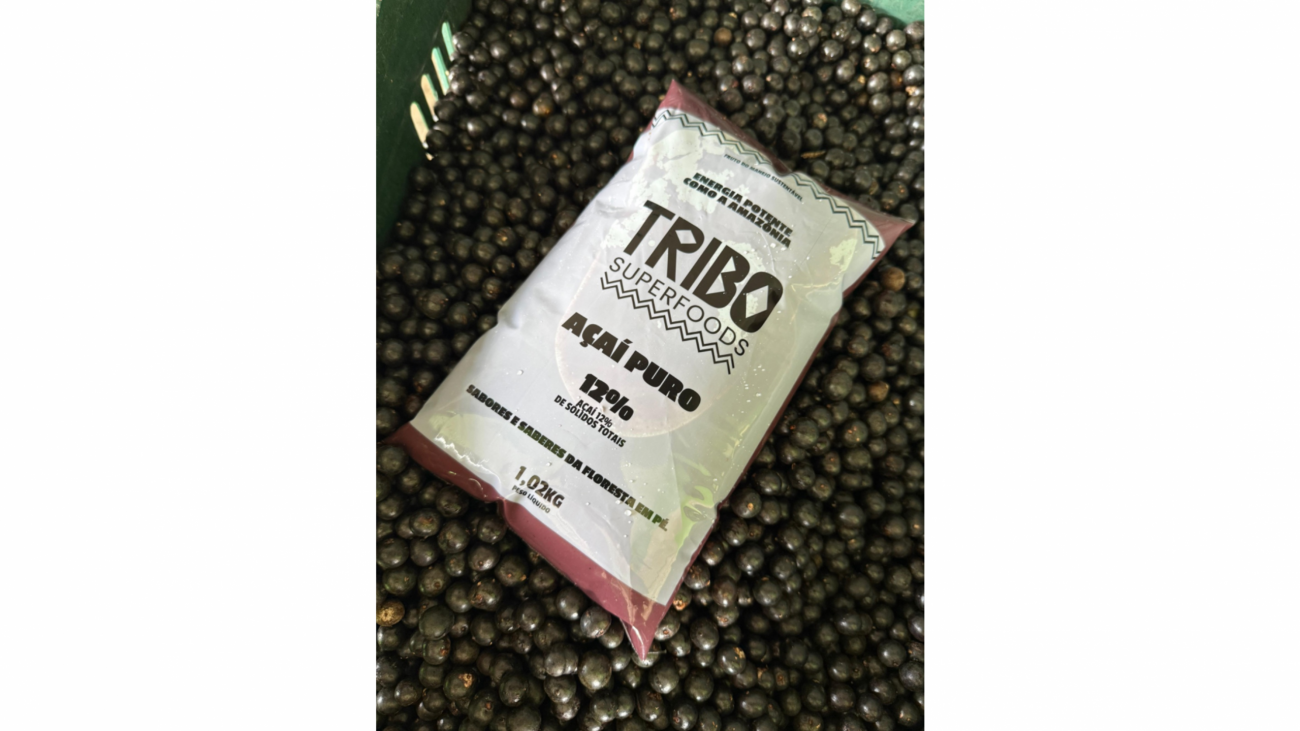
foto amaz (Site)

From taste to investment: açaí enters a new phase of appreciation in the Amazon.

Text: Maxi Media Communication

Image: Disclosure/Tribo Superfoods

A symbol of the Amazon and beloved in the global superfood market, açaí is today one of the strongest production chains in the Brazilian bioeconomy. In Pará alone, the state that produces the most of the fruit in the country, more than 150,000 families depend directly on the activity to generate income. The product, which has already won over nutritionists, athletes, and consumers worldwide for its nutrients and distinctive flavor, is now taking a new step towards innovation: it is entering the world of tokenization.

THE Tribe Superfoods and the ForestiFi, both startups supported by Amaz Impact Accelerator, completed the first tokenization operation for açaí, carried out in Igarapé-Miri (PA). The private issuance raised R$$ 200,000 in resources, with the sale of 8,000 tokens, all acquired by qualified investors. The amount will be allocated to the local production chain, strengthening the relationship between producers, industry, and the market.

Tokenization is a blockchain-based technology that allows a real asset—such as an açaí harvest—to be transformed into a digital asset, the "token." Each token represents a fraction of the asset's value, allowing investors to support the operation and receive returns tied to the actual production performance. More than just a way to raise capital, tokenization ensures traceability and transparency throughout the entire chain: from the producer to the end consumer.

According to Maurício Pantoja, co-founder of Tribo Superfoods, this innovation aims to solve a historical problem in the açaí supply chain: the low value passed on to small producers.

“Açaí is a product with high demand, but it's treated as a commodity. Small producers end up losing profit margins, while the consumer at the end of the chain is willing to pay more for a fruit with quality, provenance, and a positive impact. Tokenization ensures that this difference in value is distributed fairly, benefiting those who truly care for the forest,” explained the businessman.
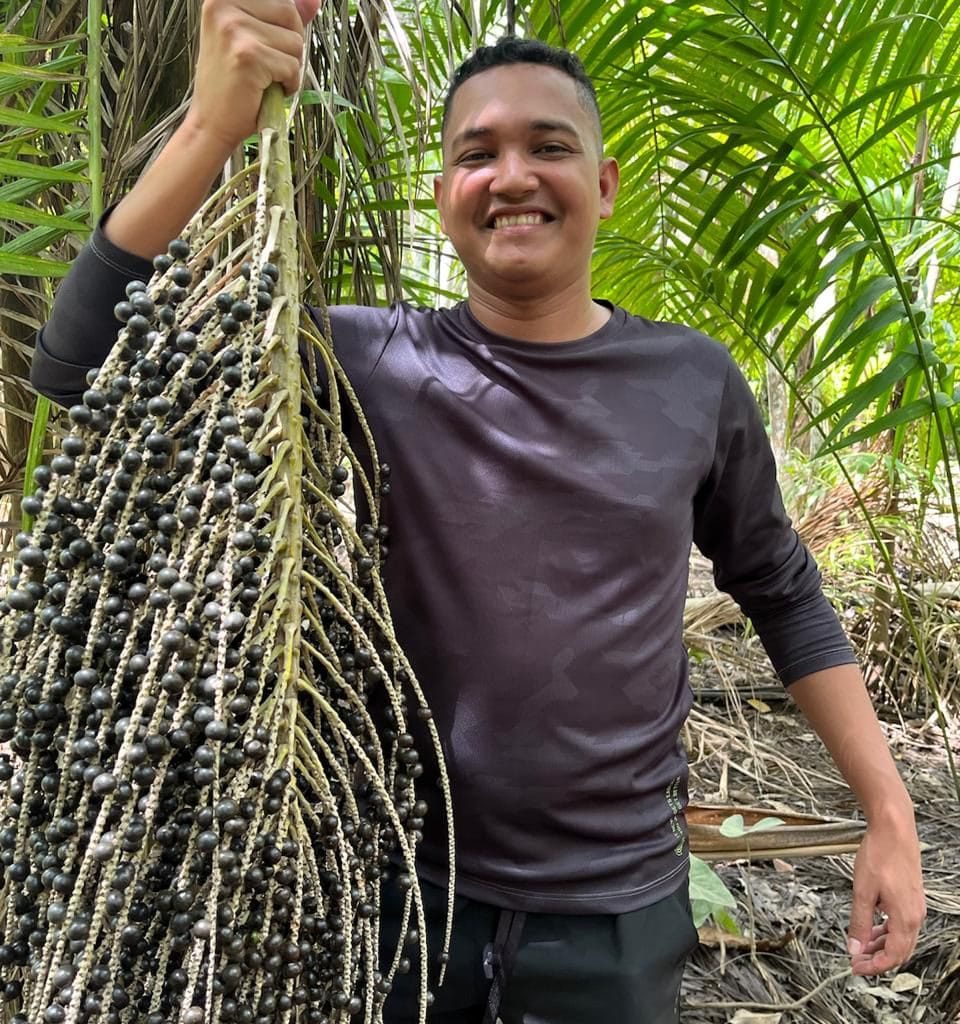
Maurício Pantoja, co-founder of Tribo Superfoods (Disclosure/Tribo Superfoods)

THE Tribe Superfoods The company operates by producing pure, additive-free açaí pulp, which is sold to other companies, including for export. ForestiFi, in turn, was responsible for structuring and issuing the tokens. According to Macaulay Abreu, co-founder of the investment platform, the operation seeks not only to raise capital but also to test and improve a scalable investment model for the socio-bioeconomy chains of the Amazon.

“The açaí supply chain has enormous potential for investment initiatives via tokenization. This initial operation helps us understand the specific challenges of the sector and plan for increasing investment volumes in the coming years,” he stated.

According to Macaulay, tokenization also brings direct efficiency gains for the operator, in this case, Tribo Superfoods, allowing for the anticipation of resources and
guaranteeing immediate working capital for the purchase of production from the cooperatives. "Before, payments could take days. Now we can pay on the same day, which makes it easier for producers and gives agility to the operator," he explained.

For producers in Igarapé-Miri, the advancement of tokenization represents a milestone for a chain that sustains thousands of families and keeps the local forest-based economy alive. Producer Leubaldo Costa, from the Caepim cooperative in Igarapé-Miri (PA), emphasizes that açaí has always played a central role in the municipality. According to him, the fruit is both the staple food for families and the main economic engine of the region.

“"Açaí ensures that we can clothe our children, send them to school, improve our homes and our transportation. It helped the municipality overcome periods of great difficulty. Today, it's what keeps our families going," he stated.

Leubaldo emphasizes that the partnership with Tribo Superfoods has contributed to strengthening this sustainable model. According to the producer, the company brought technical knowledge and new tools to enhance the quality and value of the product, along with the community's own commitment to good production practices and environmental preservation.

“We already produce with awareness and respect for the forest. Tribo has arrived to add to that, with innovation and new experiences, strengthening what we already do. This model brings hope for a fairer income and a better future for producers and the forest,” he concluded.
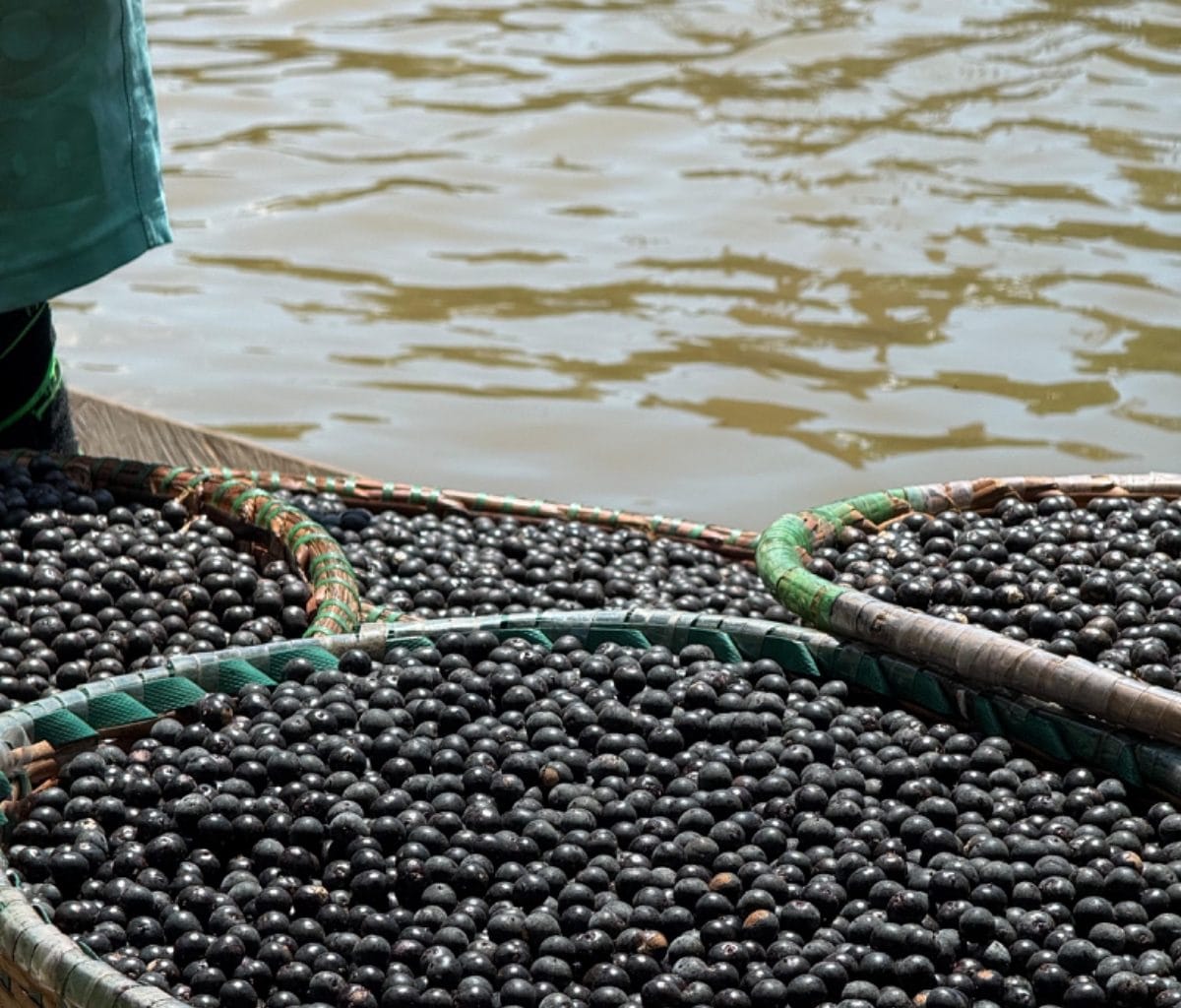
(Disclosure/Tribo Superfoods)

Partnerships that yield good results.

Tribo Superfoods and ForestiFi are startups being accelerated by Amaz Aceleradora de Impacto, a program whose mission is to boost businesses in the Amazonian socio-bioeconomy and promote sustainable development in the region.

Both companies began their acceleration journey this year, and the initiative reinforces one of the program's pillars: fostering strategic connections between entrepreneurs, investors, and local communities to strengthen business models that generate positive impact and income in the forest.

“Beyond strengthening each of the supported and invested businesses individually, Amaz's objective as an ecosystem facilitator is to enable collective solutions – that entrepreneurs and businesses find a collaborative and safe environment to implement innovations that leverage their positive impacts and also their business model. The joint operation between Tribo and ForestiFi demonstrates that, when well-articulated and intentional, cooperation has the potential to generate a significant competitive advantage for the sector,” explains Gabriela Souza, operations manager at Amaz.
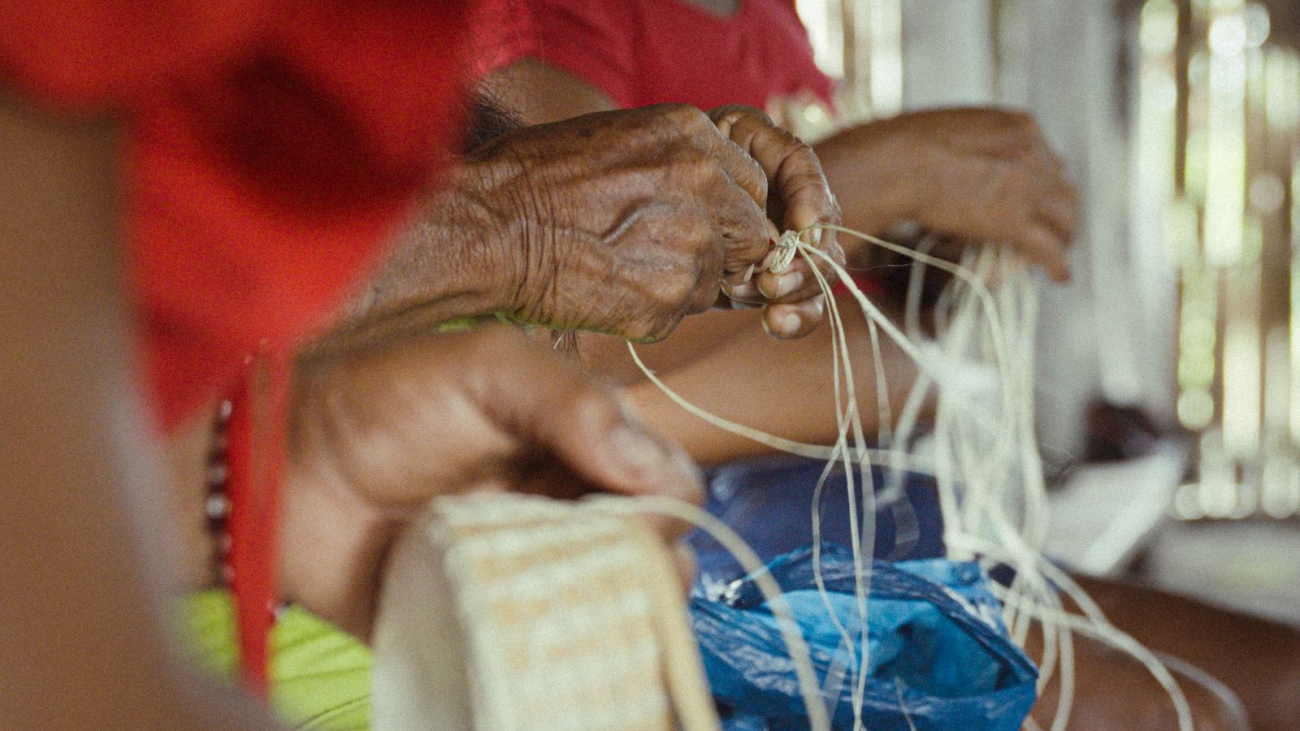
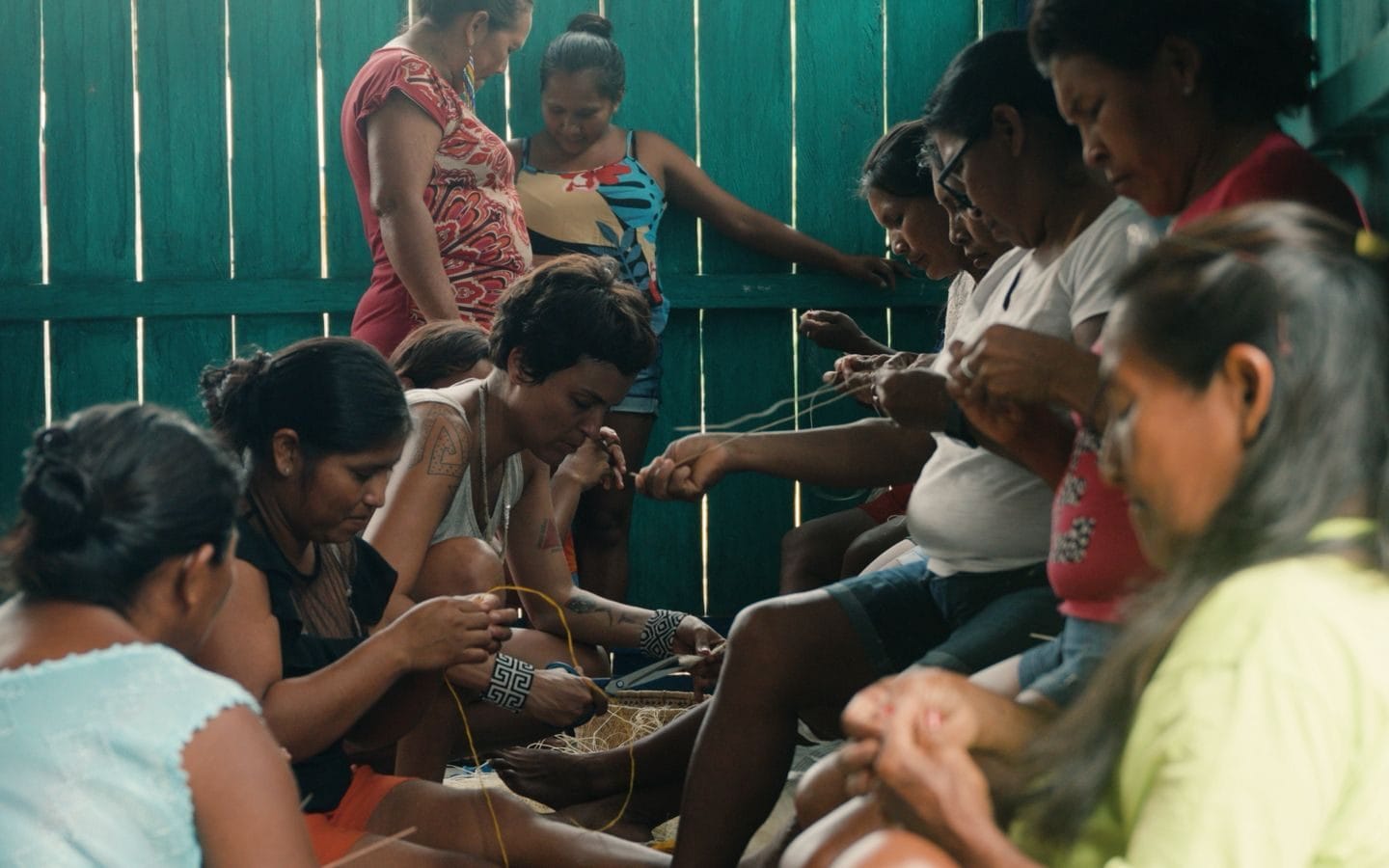
Mulheres indígenas tecendo cestarias (Divulgação/Tucum)

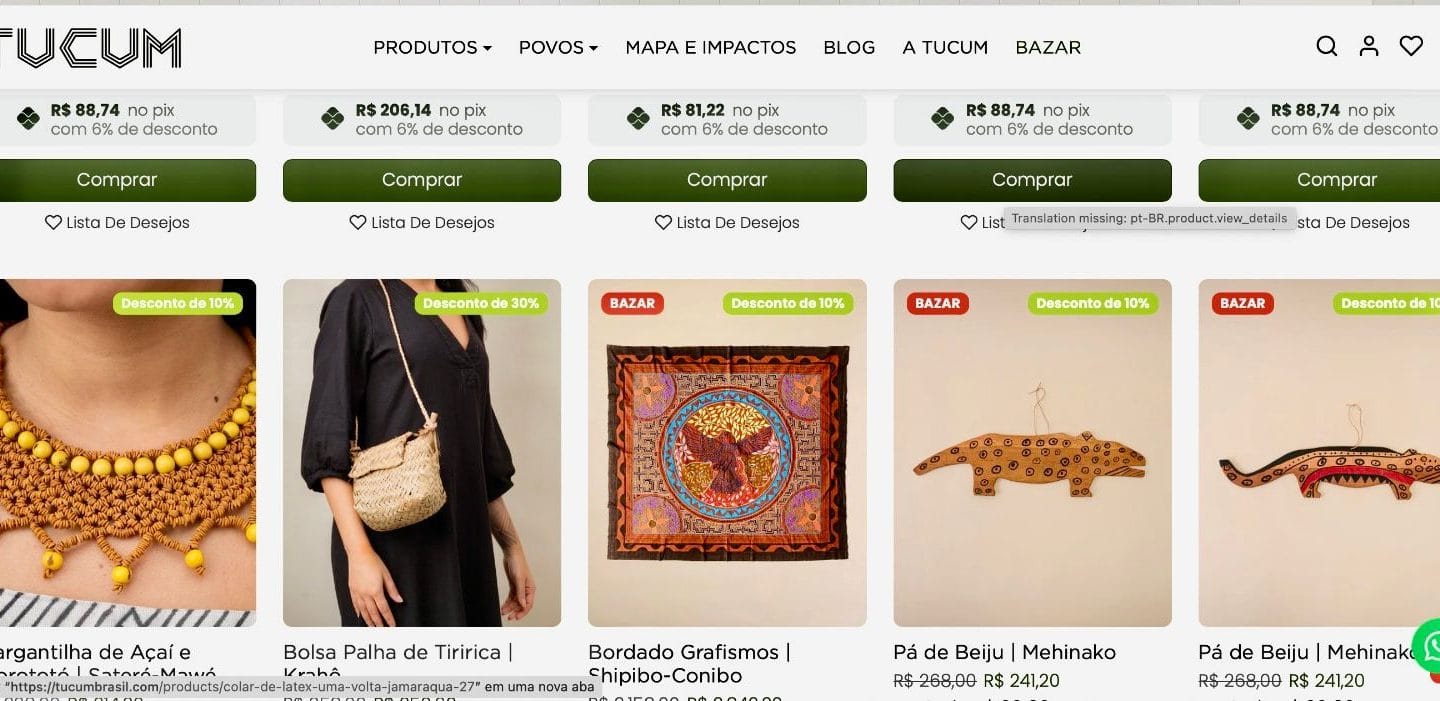
Tucum: the indigenous marketplace that transforms art into income and the forest into the future.

Text: Maxi Media Communication

Image: Courtesy of Tucum

In 2025, the tucum Celebrating 12 years of a journey dedicated to valuing the art, knowledge, and cultures of indigenous peoples, the platform has been consolidating itself as the first indigenous marketplace in Brazil, with cultural curation, long-term relationships, and socio-environmental impact.

Tucum is one of the businesses in the portfolio of Amaz Impact Accelerator., This initiative, coordinated by Idesam, aims to foster startups with socio-environmental impact in the Amazon. The brand joined the acceleration program in 2019, while still in the business organization phase, and has since been expanding its structure, processes, and impact capacity. In addition to financial support, Tucum received customized mentoring and continues to be monitored as it consolidates itself as a B2C micro-enterprise, that is, a small business that sells directly to the end consumer.

Tucum's e-commerce platform (Disclosure/Tucum)

“AMAZ’s support is defined according to the needs of the business. Balancing collective constructions with individual depth, the work with Tucum, from 2019 to 2025, reflects how much we must adapt our journey and portfolio management to the stage the business is in, generating strategic value, enabling connections and market access, according to its capacity, in constant expansion,” explains Gabriela Souza, leader of New Businesses at Idesam and of operations at Amaz.

Tucum's journey began in 2013, stemming from its founder, Amanda Santana's, experience with the Kayapó and Krahô peoples, an experience that transformed her vision of art, territory, and ancestry. This encounter gave rise to the idea of creating a business capable of bringing people and cultures closer together, sharing knowledge from the forest and recognizing Indigenous art as a technology of life, memory, and resistance.

Amanda Santana, founder of Tucum with the indigenous women of the Upper Rio Negro (Disclosure/Tucum)

Today, Tucum works in partnership with hundreds of indigenous communities across all regions of Brazil, mobilizing more than 2,500 artisans who find in Tucum's purpose a direct channel for commercialization, autonomy, and income generation. In the Amazon, this work encompasses nine states, 56 territories, and four conservation units.

This progress occurs in a context where measuring socio-environmental impact in the Amazon is a challenge shared by the entire ecosystem, due to the vastness of the territories and the time required for real change. Even so, AMAZ's portfolio already demonstrates significant results, with a total area of influence estimated at 6.4 million hectares and more than 1,959 families impacted. The accelerator's portfolio includes 16 businesses operating in the areas of tourism, cosmetics, fashion and art, food products and ingredients, agriculture and reforestation, and logistics.

Art and activism go hand in hand.

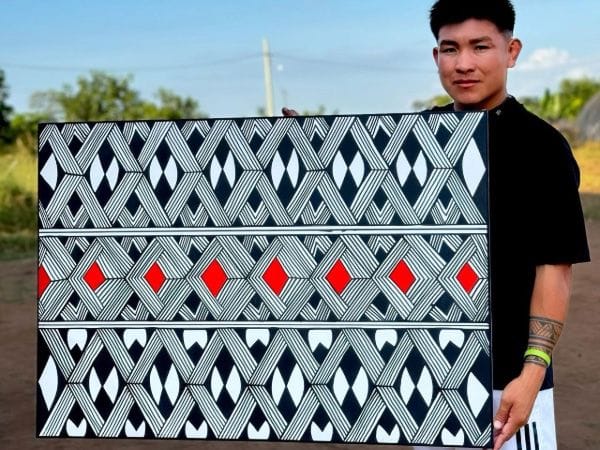
For Washamani Mehinako, a talented artist from the Kaupuna village – located in the Alto Xingu territory – inspiration comes from nature and the cultural traditions of his people. He learned from his uncle, Anapuatã Mehinako, how to make pieces inspired by animals, symbolizing the deep spiritual and cultural connection of the Mehinako people with nature. Furthermore, Washamani creates masks that represent the spirit of the blue macaw, guardian of the rivers and fish. The canvases are influenced by body paintings, with graphic designs and fish scales and fish eyes, symbols deeply rooted in Mehinako traditions, especially in festivals and rituals.

“Since I met Amanda, she has embraced my work and placed my paintings in the store. Tucum helps me not only with sales, but also with promotion, making my name reach further. It embraces the art of many peoples of Brazil, and I am in the middle of this network. I hope that the partnership remains strong, so that my works continue to travel and reach more people,” declared the artist.

Washamani Mehinako produces canvases as a form of artistic expression (Courtesy of Tucum)

Throughout these 12 years, the collections, exhibitions, experiences, and training processes developed by the company have been invitations to rethink consumption, aesthetics, and the very idea of development, placing indigenous peoples as protagonists in building more diverse, plural, and possible futures. Tucum holds the Origens seal and opened a physical store in Rio de Janeiro in 2024.

“For 12 years, Tucum has celebrated the Amazon daily, valuing and honoring the peoples who keep our great forest standing. At a time when climate change is becoming increasingly urgent, recognizing, listening to, and walking alongside the guardians of the forest is essential to mitigating its impacts. This is Tucum's mission, as we understand the importance of becoming allies of indigenous causes today,” said Amanda.

foto amaz

Idesam wins two Jaraqui Graúdo 2025 awards and consolidates its performance in the Amazonian innovation ecosystem. 

Text and Image: Idesam Communication

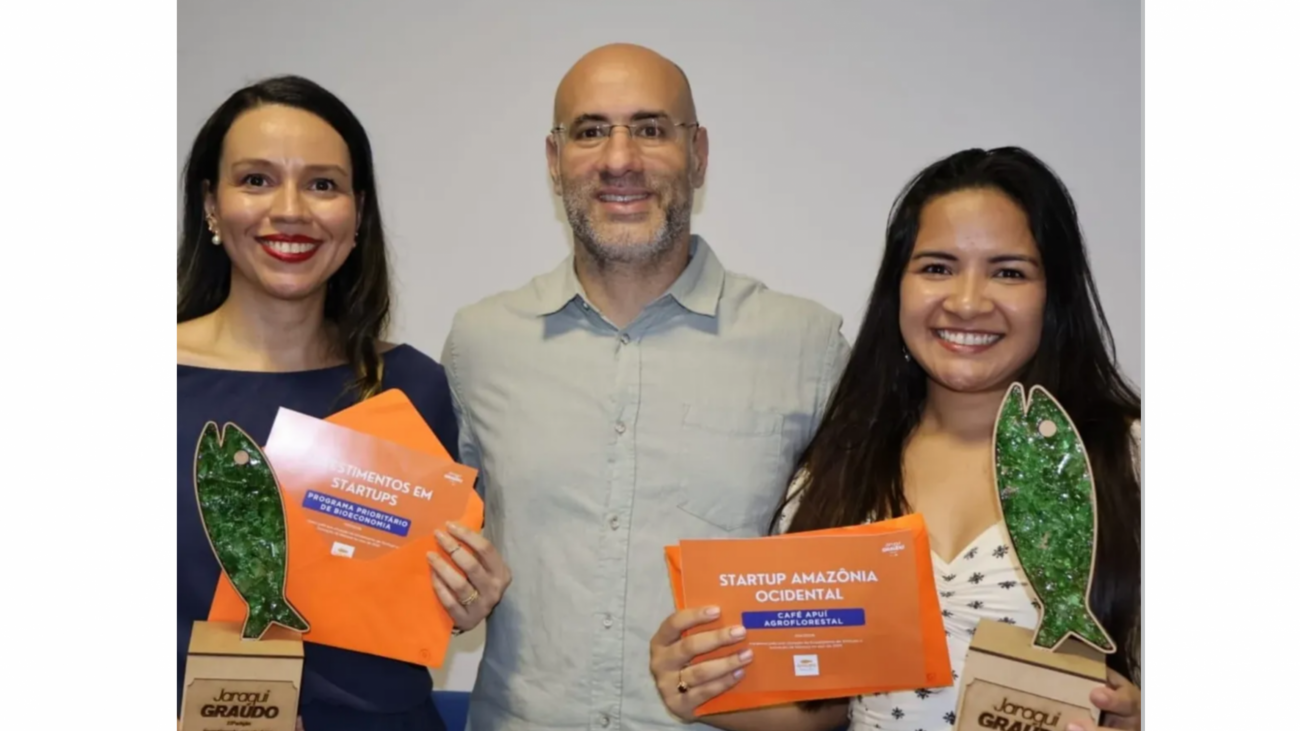
Idesam ends 2025 having won two awards at the 10th edition of Large Jaraqui, one of the main awards in the Amazon startup ecosystem. The ceremony was held this Tuesday (9), at the Amazon Biobusiness Center. The recognition is granted annually by the Jaraqui Valley community, which brings together entrepreneurs and initiatives focused on innovation and creating connections between businesses in the region. This year, the award had 19 categories. 

In this edition, the Priority Bioeconomy Program (PPBio), from Suframa and coordinated by Idesam, was awarded in the Startup Investments category, while Amazônia Agroflorestal, a spin-off of Idesam, won in the Legal Amazon and Amapá Startup category. 

In addition to the awards, Amaz Aceleradora in the "Accelerator" category and Idesam in the "Innovation Institute" category were among the top three organizations, reinforcing Idesam's relevance in different stages and links of the entrepreneurship and innovation environment in Amazonas. 

The award recognizes projects, institutions, and leaders who contribute to the development of Manaus' innovation ecosystem. The final evaluation is carried out by an independent jury composed of representatives from the innovation community. 

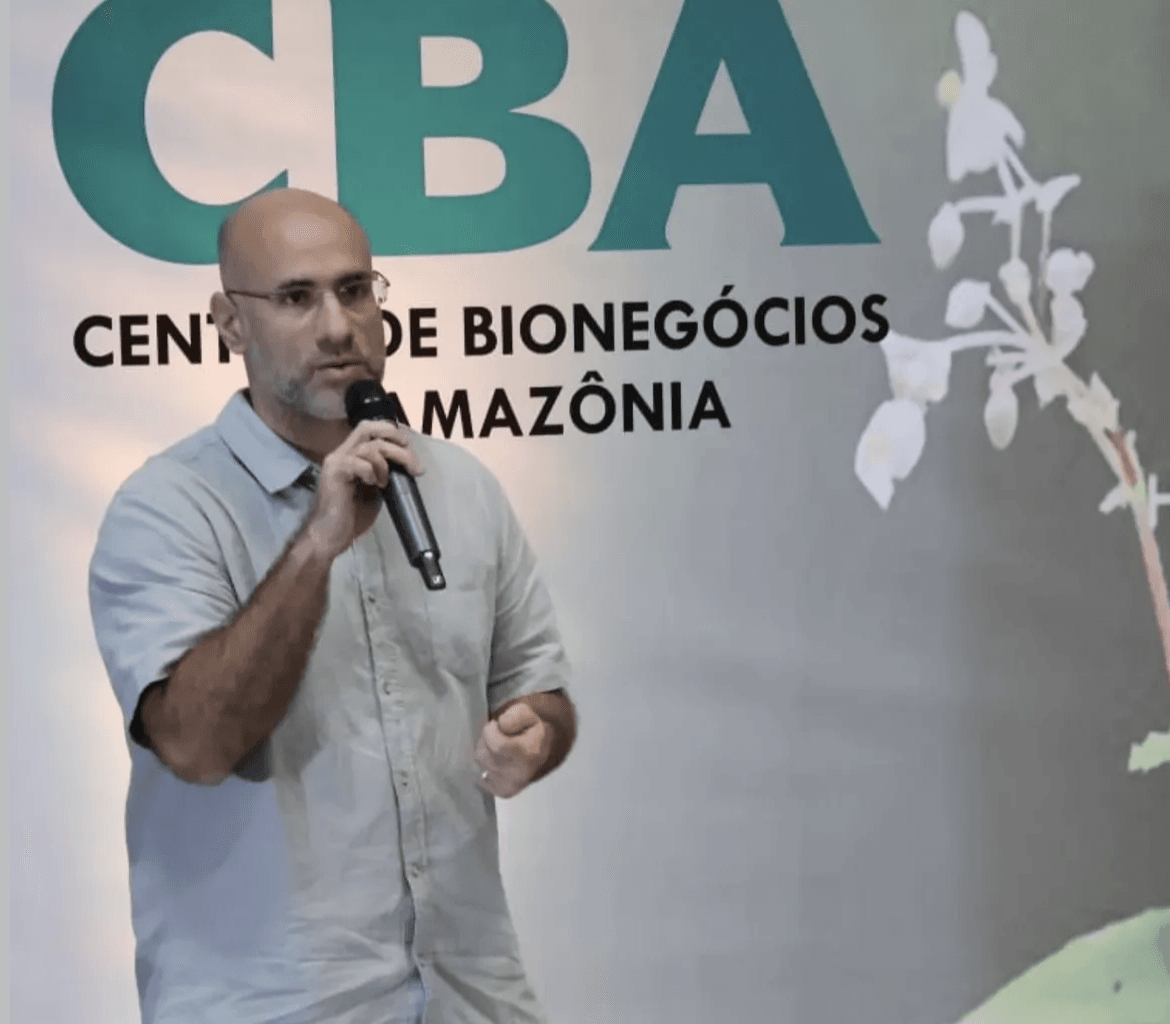
Idesam's technical director, André Vianna, celebrated the recognition from the ecosystem and highlighted the institute's work across various aspects of the innovation ecosystem. "This is a very special award because it comes from the community itself. It's recognition of the work we've been doing and shows the diversity of Idesam's activities in the different links of the innovation ecosystem.". 

André Vianna, technical director of Idesam

Representing the Agroforestry Amazon, Nayara Diniz also highlighted the importance of this year's achievement. “It is an honor to receive this award. It represents recognition of the work of the partner producers in Apuí, the technicians in the field, and the entire commercial team that takes Apuí Coffee from Amazonas to the world. This year, we had the opportunity to stand out among the 15 best robusta coffees in Brazil, and this is the result of collective work, done with dedication and respect for the Amazon.”. 

PPBio leader Karol Barbosa highlighted the role of partnerships in achieving the results. “The Jaraqui Valley award is a celebration of innovation, so the Priority Bioeconomy Program has been working for the past six years together with wonderful partners who help us, and we don't do anything alone.”. 

The 10th edition of Jaraqui Graúdo was supported by Platinum Sponsor Idesam; Gold Sponsors Amaz, PPBio and F7Live; Bronze Sponsors Osten Digital, Residuum and Almaden; and Startup Sponsors Grupo Navegam, Rosh, Faço a Conta and Apoena Produtos do Amazonas, who contributed to the award ceremony and to strengthening the Amazonian innovation ecosystem. 

WhatsApp Image 2025-12-02 at 10.28.19

Using ingredients from the Amazon, MOMA consolidates a sustainable beauty model.

Text: Maxi Media Communication

Image: Courtesy of MOMA

The Brazilian cosmetics market continues its strong expansion and shows no signs of slowing down. Projections indicate the sector will reach US$23 billion in revenue by 2025, maintaining an average annual growth of 4.55% until 2030. Today, Brazil holds the position of the third largest beauty market in the world.

In this scenario dominated by big brands, companies like MOMA They are gaining ground by focusing on offerings aligned with the new demands of the public. Natural ingredients, transparency in the production chain, recyclable or biodegradable packaging, and formulas free of microplastics and petrolatum are decisive factors for a growing segment of consumers concerned with more sustainable and ethical choices.

The brand, founded by pharmacist Vivan Chun, combines research focused on performance, Amazonian biodiversity, and socio-environmental impact to create products that connect self-care, science, and the forest.

“I had been developing cosmetics as a hobby since 2012, but I still didn’t see myself as an entrepreneur. That only changed when I started working with regenerative agriculture and agroforestry. It was there that I understood that the rural farmer is, in essence, a great entrepreneur,” she said.

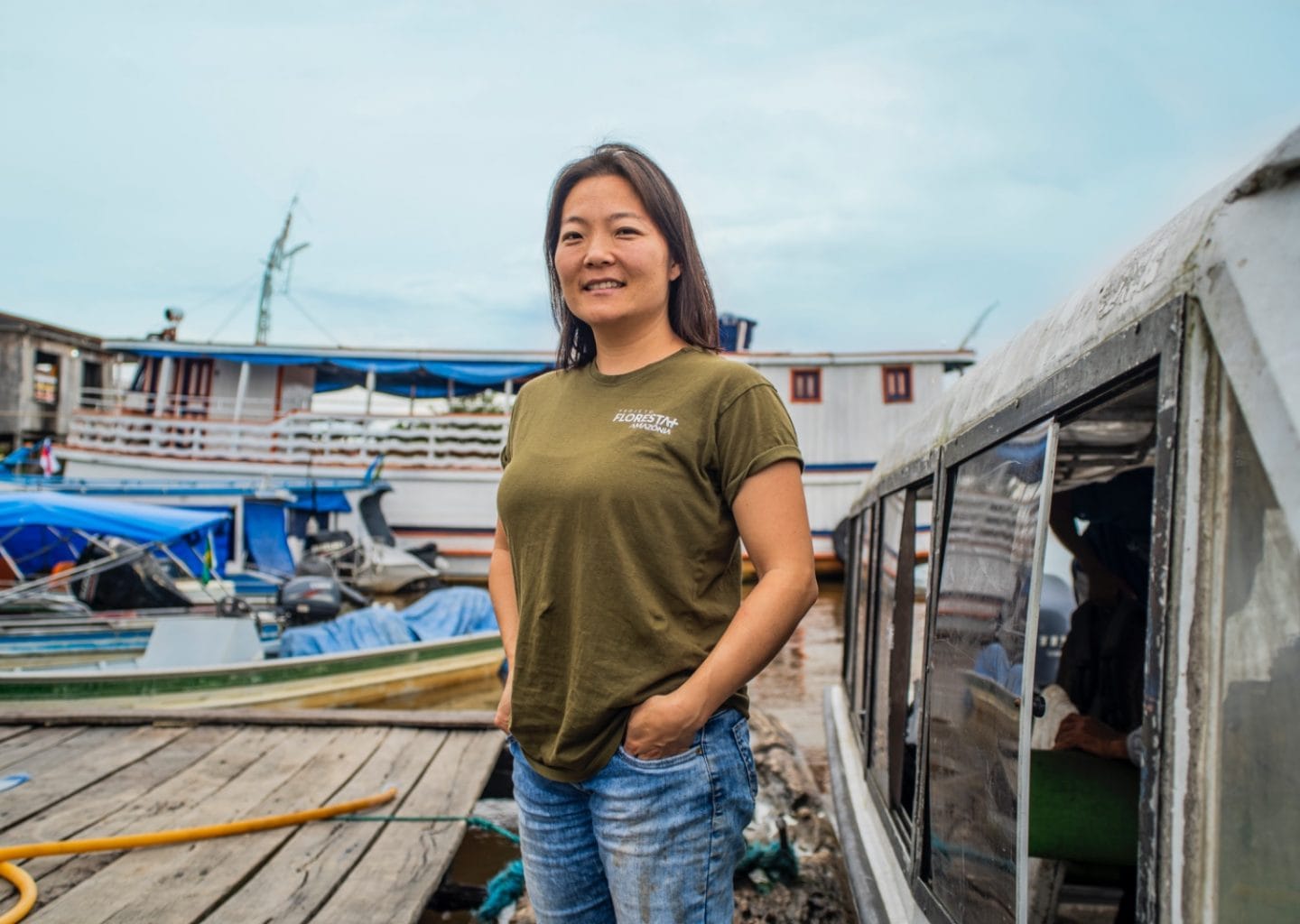
Vivian Chun, co-founder of MoMA (Disclosure/MoMA)

The turning point came after the pandemic, when Vivian saw the possibility of connecting her knowledge in formulation with production chains in the Amazon. "I realized I could unite purpose and impact: using the cosmetics I already created, now adding communities and generating transformation at the grassroots level," said the businesswoman.

Today, MOMA works directly with inputs produced by indigenous communities, riverside communities, and family farmers, in networks such as Inatú Amazônia, which supplies the copaiba oil used in the moisturizer's formulation. Co-founder of the brand, Marisa Taniguchi, emphasizes that the collaboration goes beyond the commercial aspect and contributes to strengthening the entire production chain in the region.

“The partnership with MOMA strengthens our network because it increases the visibility of our products. This type of collaboration generates new market opportunities, opens doors for strategic connections, and values the work of extractive communities. When initiatives like this are combined with local efforts, we strengthen socio-biodiversity and show that it is possible to develop the Amazon with respect, responsibility, and shared benefit,” he stated.

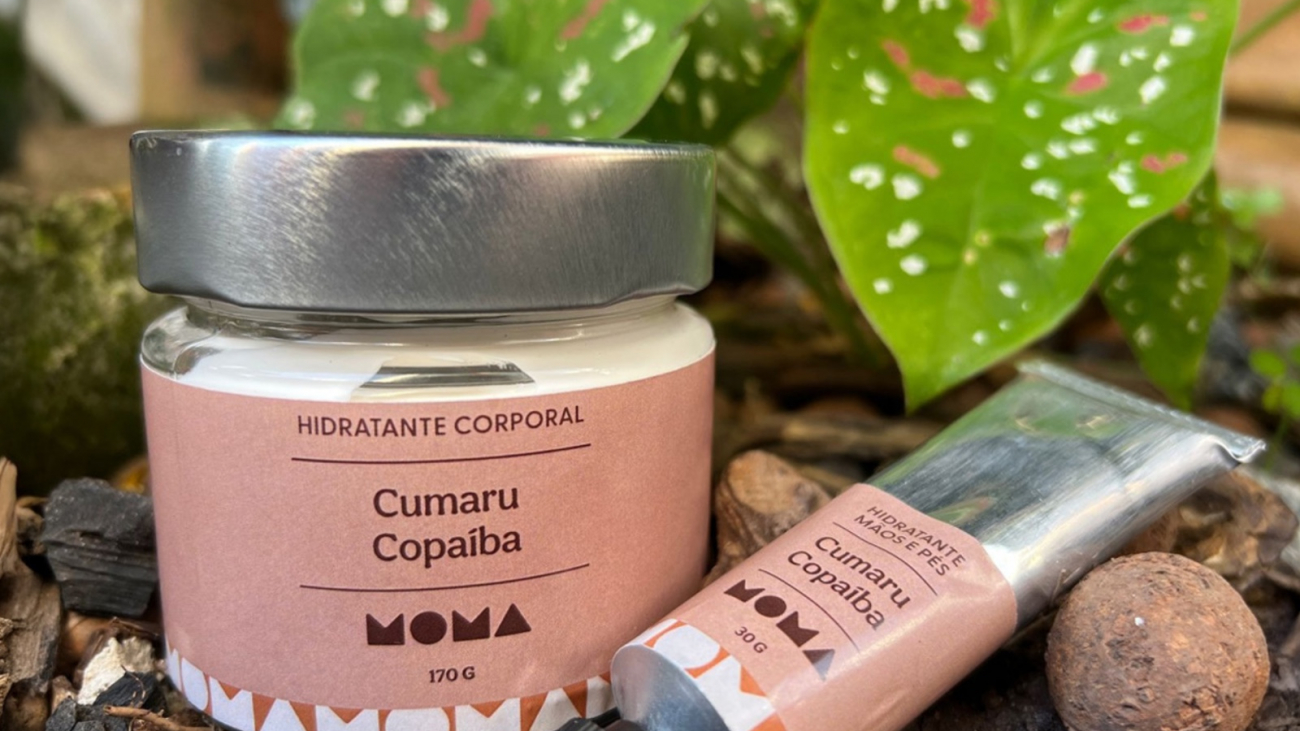
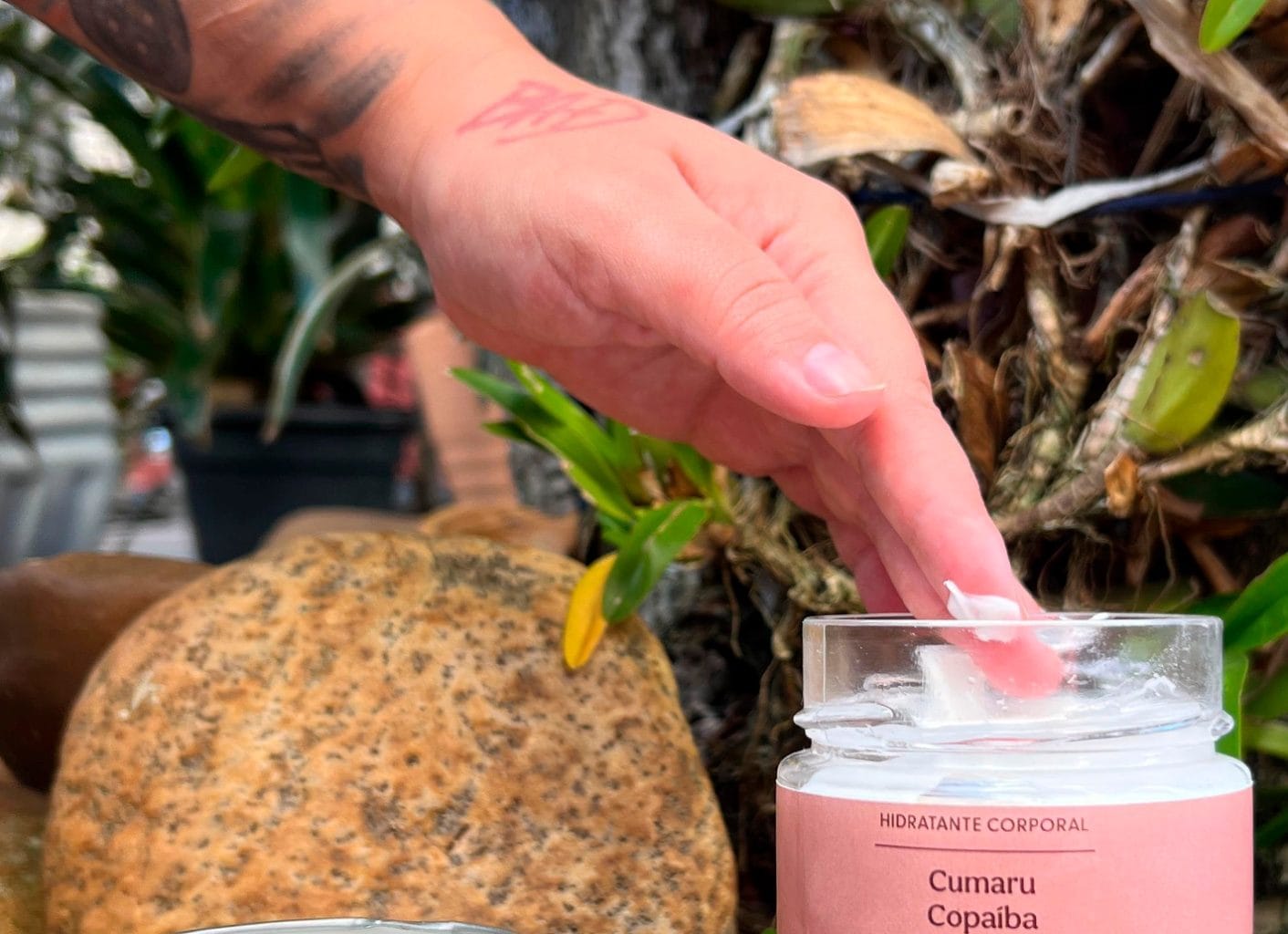
The product combines natural active ingredients such as Cumaru, Aloe Vera, Andiroba, and Cupuaçu Butter, offering deep hydration, rapid absorption, and a velvety touch. The formula highlights the smoothness provided by copaiba, rich in β-caryophyllene, and the natural aroma of cumaru, with subtly vanilla notes.

Beyond its connection to the forest, the brand continuously invests in research and development. “In practice, R&D means improving formula, texture, color, aroma, and user experience; seeking out more refined and safe ingredients; investing in clinical research; and exploring new active ingredients. It's constant innovation,” explained Vivian.

Publicity/MoMA

Acceleration that drives business expansion and helps measure impact.

The brand strengthening process also gained momentum with the acceleration program led by Amaz, an impact accelerator coordinated by the Institute for Conservation and Sustainable Development of the Amazon (Idesam). MOMA had already participated in other programs such as 'Amazon at Home, Standing Forest' and 'More Forest', before being one of the companies selected in Amaz's 2023 Business Call.

The 2024 acceleration journey was structured around strategic and operational pillars, culminating in financial support and market visibility. “The program began with an intense focus on performance management and internal controls through workshops and process modeling, which we combined with efforts directed towards understanding the market and positioning the brand,” explains Rafael Ribeiro, acceleration leader at Amaz.

“During these processes, we gained maturity, connections with other entrepreneurs, visibility, and access to sales channels, such as the partnership with Mercado Livre. With the investment, we were able to launch products, improve the website, hire people, implement systems, and structure processes,” reported the brand's founder.

With a strengthened foundation, Vivian outlines the next steps for the brand: new product launches, improved packaging, and communication focused on specific skincare categories. In the socio-environmental field, we are advancing in formalizing purchase contracts with supplier communities, ensuring predictability, security, and continuous income.

“The expansion of MOMA needs to go hand in hand with valuing the forest and the people who live from it. Our commitment is to grow without losing our connection with those who make all of this possible,” he reiterated.