


Text: Maxi Media Communication
Photo: Daniela Lopes
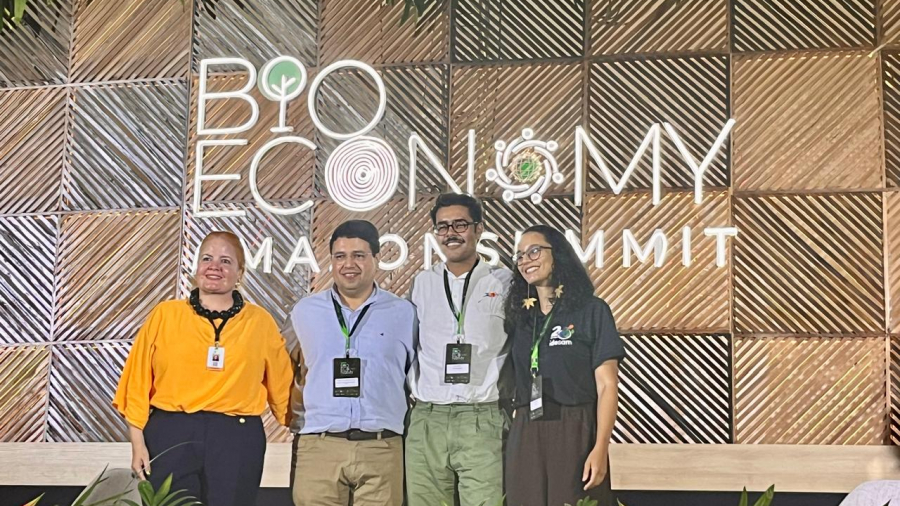
At the second edition of the Bioeconomy Amazon Summit (BAS), which took place on July 30 and 31 at the Vasco Vasques Convention Center in Manaus, the discussions, connections, and opportunities revolved around how to overcome the challenges of scale, logistics, and investment for businesses that are already active or in the incubation phase.
Officially launched in September 2023 by the Global Compact – Rede Brasil and the venture capital firm KPTL, the Bioeconomy Amazon Summit (BAS) aims to broaden the discussion around the role of innovation and entrepreneurship in the Amazon in the global climate change agenda.
Gabriela Souza, operations leader at Amaz, an impact accelerator coordinated by Idesam, highlighted during the panel "The Prospects for the Bioeconomy from the Perspective of Startup Ecosystem Coordinators" that capital investment in the Amazon bioeconomy needs to be patient. "The private capital that arrives must be intentional, catalytic, and patient. We must ensure that financial solutions truly understand the business demands and then design solutions. I think that when we talk about ecosystem businesses, the challenge is always figuring out what the next financial support will be, what the next fundraising will be," the manager points out.
Also present at the debate were Carlos Carvalho, director of biobusiness at CBA, and entrepreneur Priscila Almeida of Assobio. In addition to the panels, the event hosted business roundtables and brought together 150 startups in the entrepreneurial arena.
Impact Connections
Startups from Amaz's portfolio were also present. Tribo Superfoods CEO Mauricio Pantoja highlighted the importance of BAS in finding strategic partnerships and new customers for the business.
"What's important here are the great opportunities to connect with other entrepreneurs who can help our businesses, whether because they operate in the same management chain as us or even through exchanging conversations with other entrepreneurs, learning from the journey of the more experienced ones," Pantoja observed.
In addition to Tribo Superfoods – a startup that operates in the açaí, cupuaçu, and cocoa chains, benefiting two cooperatives and impacting 340 families in communities in Igarapé-Mirí and Abaetuba, in Pará – other startups from Amaz's portfolio were at the event.
In the entrepreneurial arena, more than 150 startups were present during the two-day event, including the agroforestry cosmetics company Moma Cosméticos, the one that operates in the superfood sector, Mazô Maná; Zeno Nativo, which also operates with food in the sustainable management chains of cocoa and Brazil nuts; and ForestiFI, a fintech that works with tokenization of forest assets, all of which are part of Amaz's business portfolio.


Add a Comment