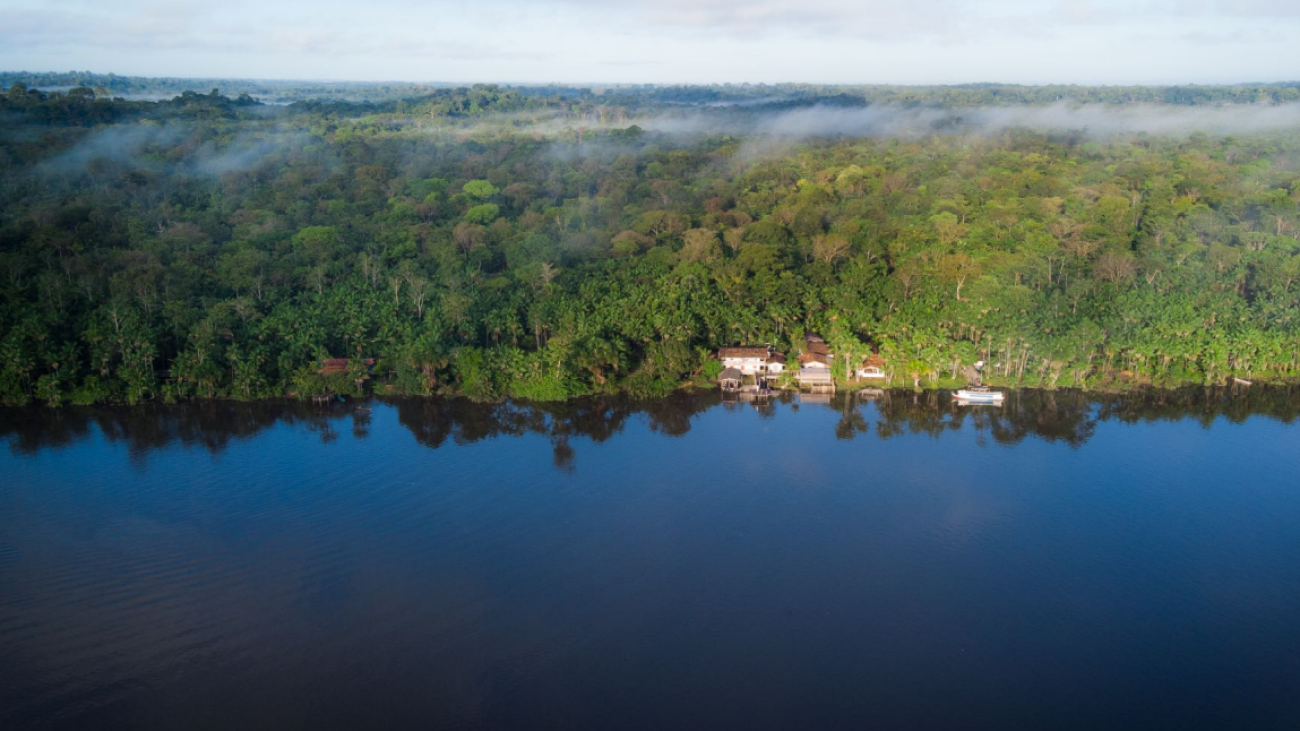
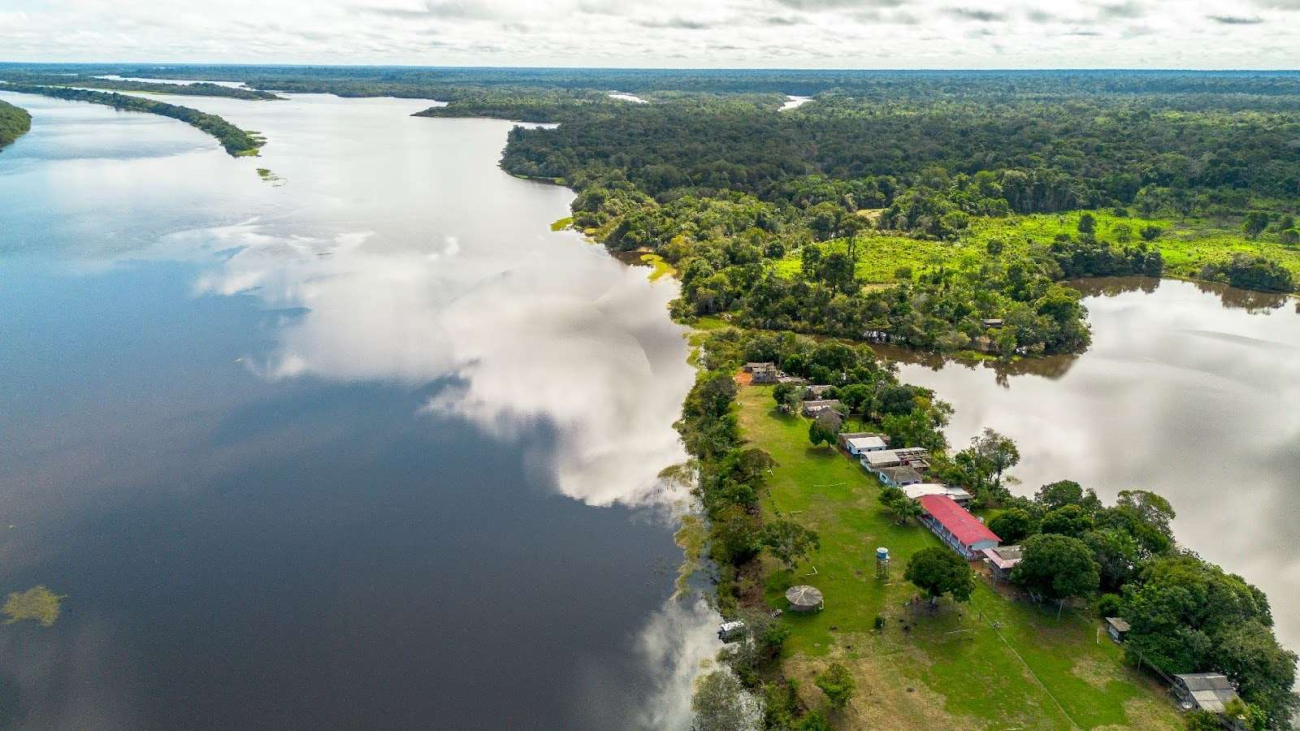
THE Native Zeno, a company accelerated and invested by AMAZ in 2024, completed the renovation and expansion of the nut and cocoa bean processing factory. Located in Acará, state of Pará, the renovated structure increases productivity by 50%.
The work was carried out with financial support from AMAZ: “We used just over 30% of the AMAZ contribution. This reform was already on the horizon, we took advantage of the resource to improve not only productivity, but the environment for employees, providing more quality and safety”, says Zeno Gemaque, founder of Zeno Nativo.
The renovation of the space took almost four months, a time offset by increased productivity from now on. Furthermore, Zeno highlights the reduction in the possibility of food contamination, as the environment has improved and has become even more suitable for handling chestnuts and almonds. And also the air conditioning of the entire area, which makes the factory's work process healthier for employees.
“In addition to all this, we also renovated and expanded our cocoa drying greenhouse, which now uses a new technique that has greatly improved the aesthetics of cocoa and the environment. These works make a big difference to our enterprise”, says Zeno.
Zeno Nativo works with the production of Brazil nuts and cocoa beans native to the Acará River region, contributing to the conservation of the Amazon. The chestnuts are recognized for their quality and are sold especially at the Ver-o-Peso market, in Belém, and elsewhere. Cocoa beans serve chocolate makers in Brazil and around the world.
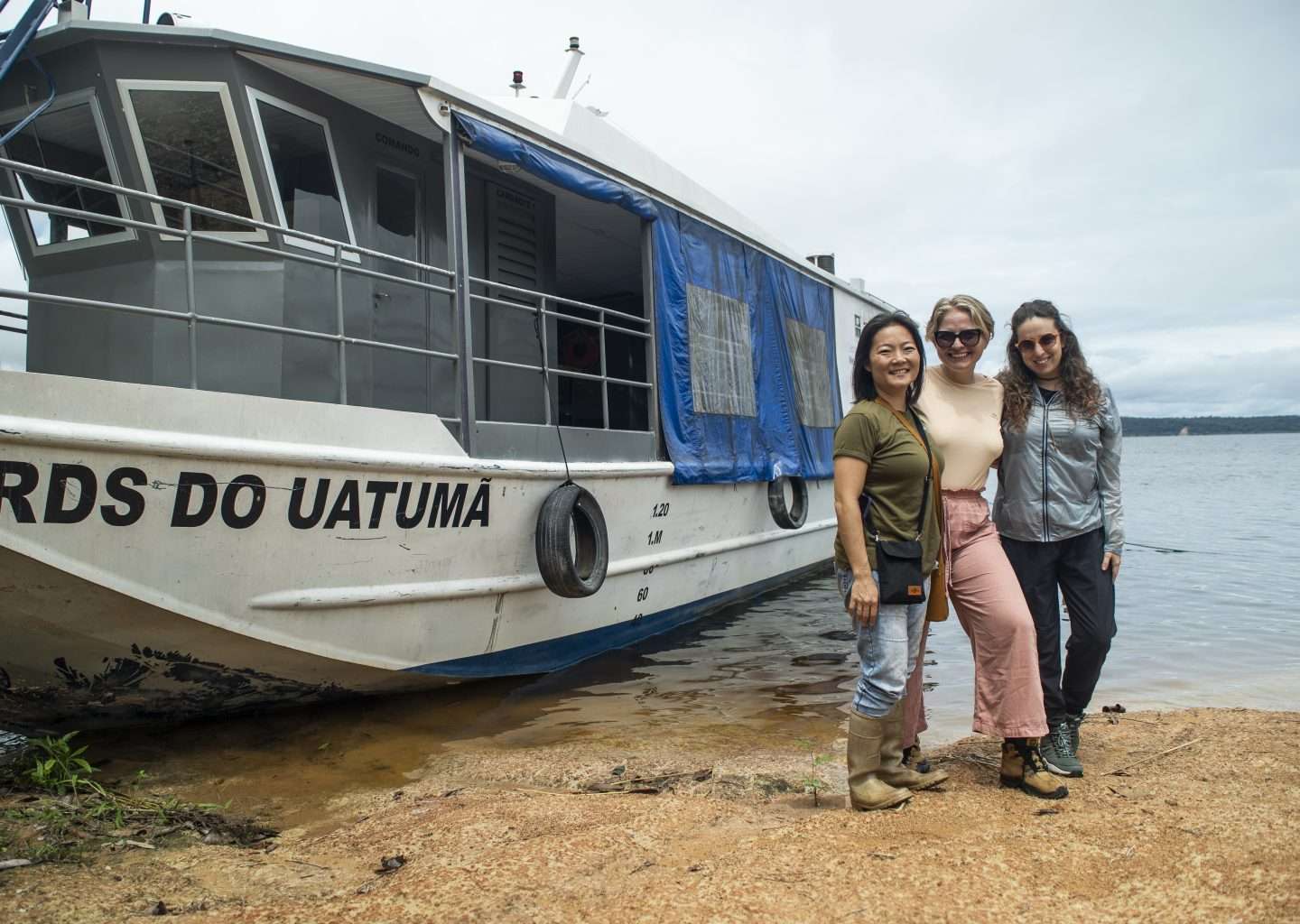
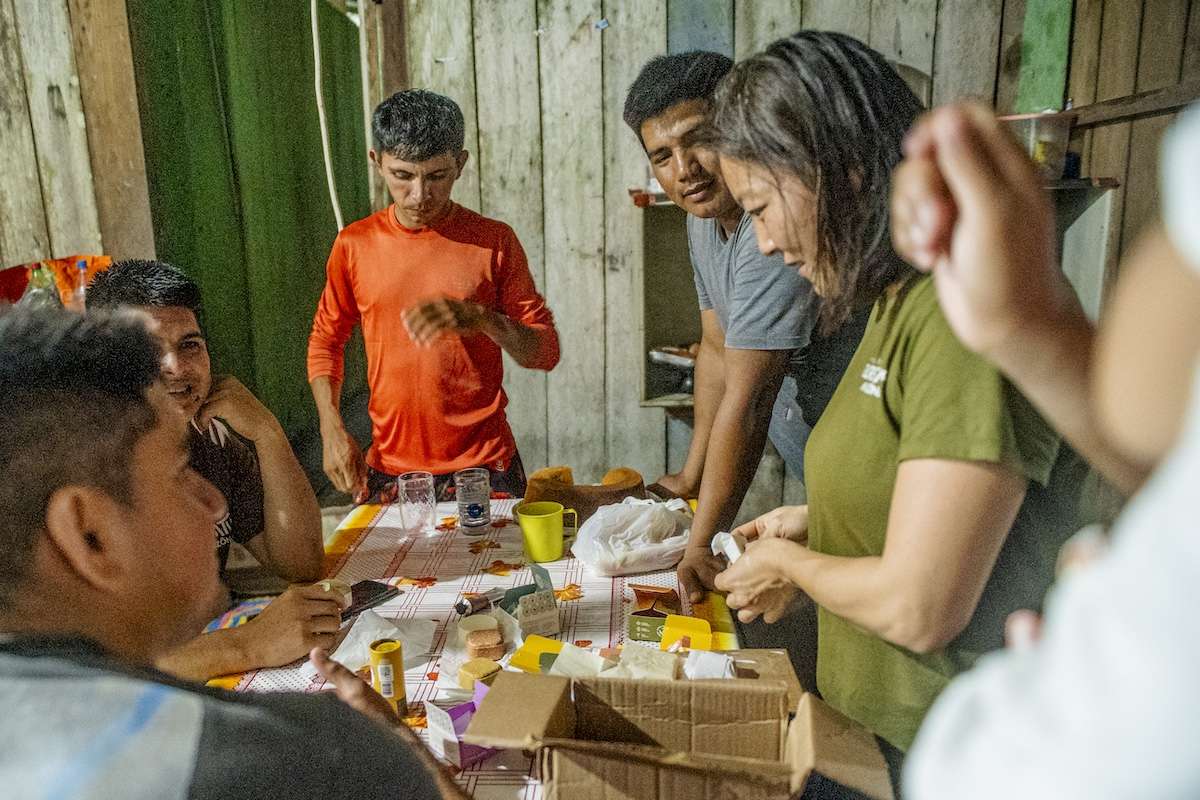
At the beginning of May, Vivian Chun, founder of MOMA – business accelerated and invested by AMAZ this year – visited the Uatumã Sustainable Development Reserve (RDS), in the state of Amazonas.
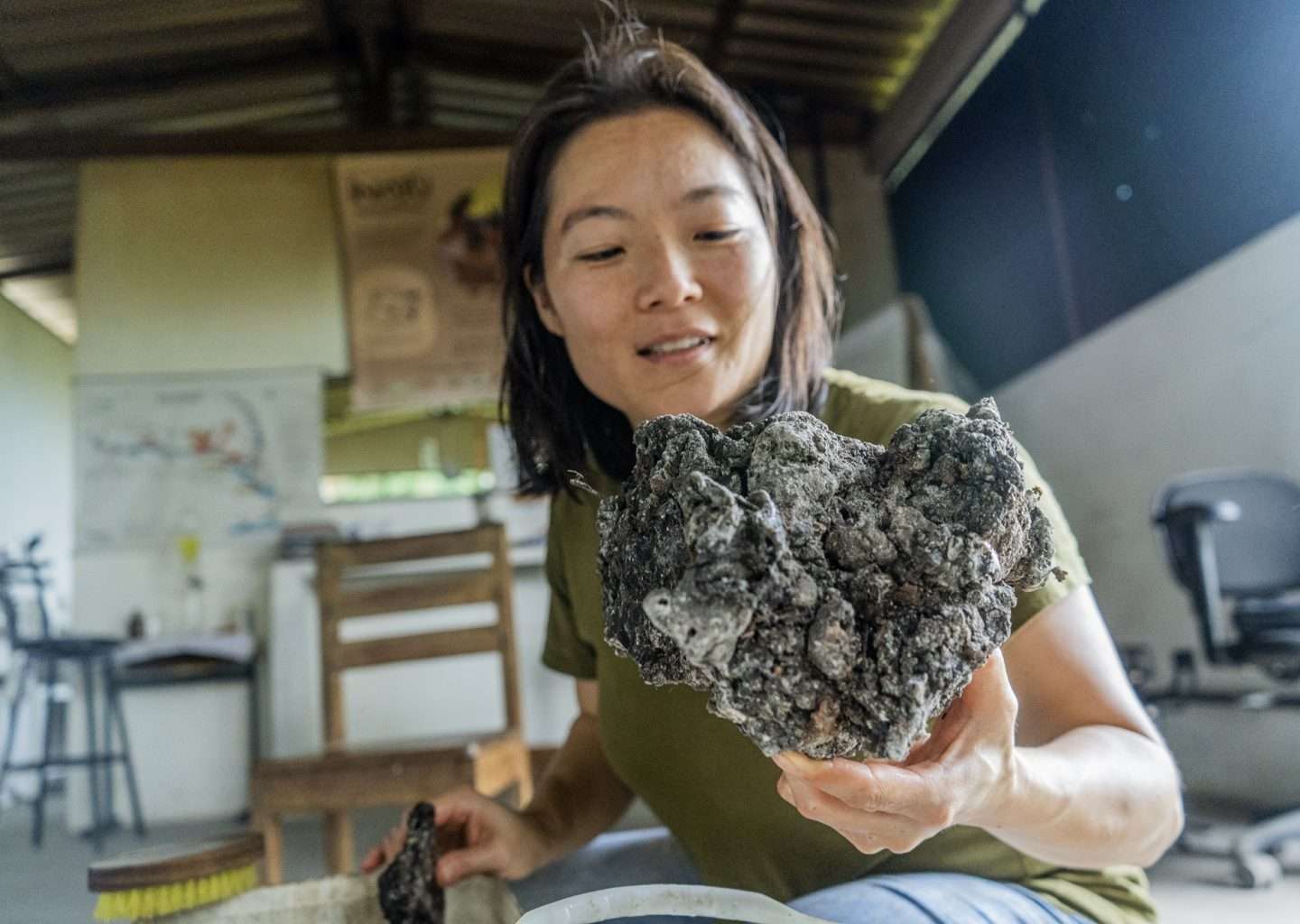
Accompanied by Julia Tatto, co-founder of Urucuna, and by Louise Lauschner, market access specialist in Idesam, Vivian, who uses raw materials from the Amazon and other Brazilian biomes in her products and practices fair trade – MOMA products have the Origens Brasil seal -, was in the RDS of Uatumã to meet the community that extracts and processes white rosin, produced by the species breu-branco-verdadeiro, a tree native to the Amazon that can reach up to 30 meters in height.
The fragrant resin has the appearance of a gray rock and solidifies at the base of the trunk, and its extraction and processing require a lot of time and artisanal work.
Photo: Rodrigo Duarte/courtesy MOMA
One of the points highlighted by Vivian after the visit is related to fair trade:
“Since I started buying white rosin, in 2022, the value per liter has more than doubled. Of course we feel this impact, we have a complete cost plan for the final product for commercialization, but I would like to highlight that, being there with the community and seeing the manual work of extraction and processing, the current price still seems cheap to me. . First you need to enter the forest, which is a place that poses risks. Then there is the collection, transport to the plant, where the pitch is washed, and any and all wood residue is extracted, in each piece. The resin sticks, and this process takes time. After being washed, the rosin is crushed with a pestle, goes into the vats, and then goes through the distillation process, in short. Seeing this entire process, we value the raw material even more. There are many hands behind a liter of pitch.”
MOMA uses white rosin in five products: two deodorants, rosin and lavender shampoo and conditioner, and rosin and basil soap – the latter will soon no longer be produced, but will be replaced by another that will also contain the resin in its composition. .
The resin and vegetable oils and butters used in MOMA and Urucuna products have been purchased from Inatu Amazonia, a collective brand created by Idesam and extractive associations from the RDS of Uatumã within the scope of the Cidades Florestais project, financed by the Amazon Fund, to facilitate communication with the market.
Idesam has worked directly at RDS since 2006, having been responsible for coordinating the preparation of the Management Plan and the implementation of its programs.
Louise Lauschner, market access specialist at Idesam, met Vivian a few years ago, during the entrepreneur's search for products with origin and traceability, and highlights that she has always shown concern about fair trade.
“This commitment is not only with Inatu Amazônia, but also with other suppliers in the Amazon and other biomes. It is rare to have a raw material buyer who goes to the extraction and processing site to meet the extractivists and understand where the product they receive comes from with traceability. This relationship is very interesting, because there is a real exchange between the production knowledge that the community has and that of the entrepreneur, the product industry. And from the beginning, Vivian demonstrated this interest in getting to know the extraction sites, she buys from other associations and wants to know the processes in more depth as well. This represents a benefit for her, because she gains even more knowledge to talk about the origin of the products.”
Photo: Rodrigo Duarte/courtesy MOMA
In the RDS of Uatumã, Vivian visited the communities of Boto, where the oil plant is located, and Bom Jesus do Angelim, where the group spent the night. She reinforces Louise's impression of the importance of exchange and connection: “Both I know their culture, which is different from mine, and they know what I do with the raw materials they extract with such care. How does this turn into a product. This generates greater connection, transparency, reinforcement of the partnership and appreciation of what they are doing. They realize that what they do generates value. And from my side, when I understand the context in which this raw material is extracted, their lives, the amount that is paid makes even more sense. This all reinforces that we are on the right path.”
Vivian took the MOMA products that have white rosin in their composition for the communities to learn about, and highlights that the reception was very good. Although he also took other products that do not have the resin in their composition, he noticed that the interest was much greater in those that included it as an ingredient. “It’s really beautiful to see how they connect with this raw material. It is truly something that they love and value, I could see a very genuine joy. And it was important to realize, through the testimony of Wanderley Cruz (manager of the Uatumã RDS Oil Plant), that our relationship makes a difference in their lives, because it guarantees a real source of income.”
Photo: Rodrigo Duarte/courtesy MOMA
“I think talking about this production chain makes more sense when I, Vivian, experienced it, felt it firsthand. It is a very important experience and information to translate to the public that uses MOMA products the origin of the raw materials and everything that is behind each one of them”, adds Vivian.
AMAZ reports the exit of two accelerated companies from its portfolio, whose investment contracts were terminated after a careful and strategic analysis.
They are no longer part of the AMAZ portfolio:
1. Simbiótica/Impacta Finance – Termination took place on 04/01/2024.
2. BR Carbon – Termination took place on 05/06/2024
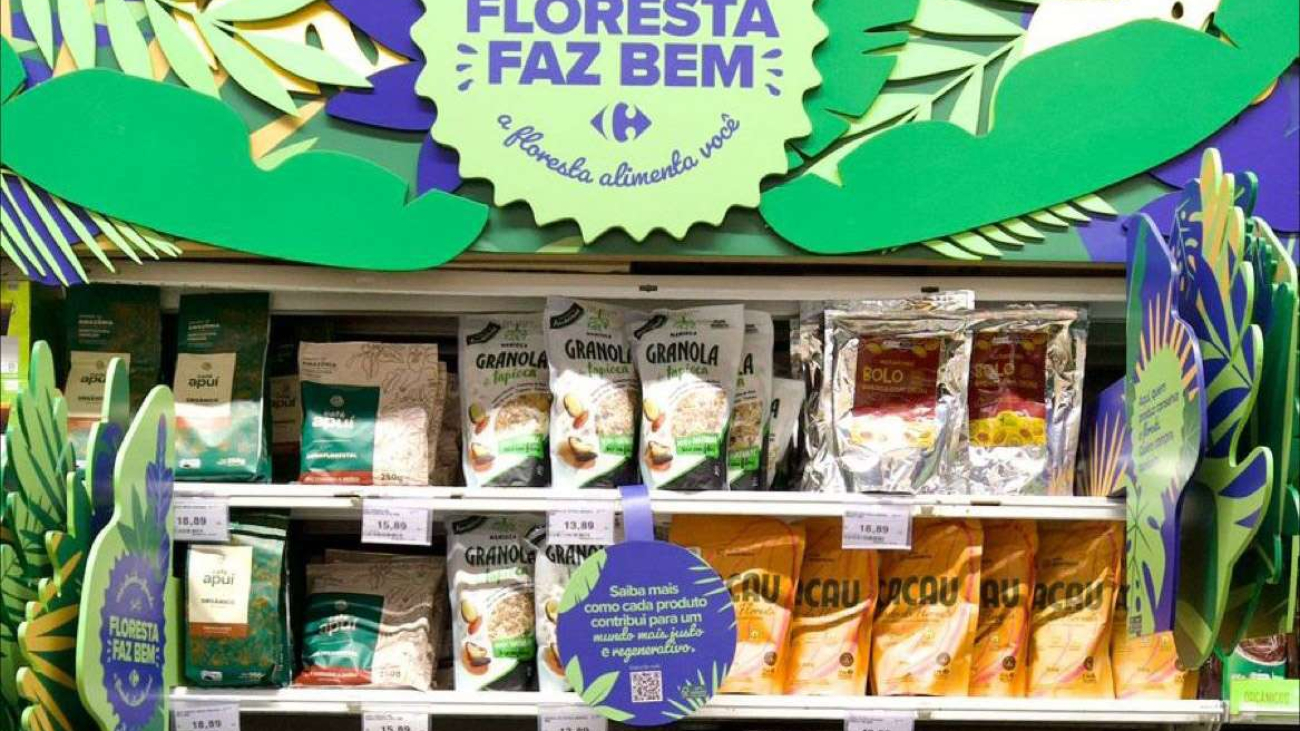
Mazô Maná, Na'Kau, Manioca and Soul Brasil are among the brands that are part of the Floresta Faz Bem Program
Chocolates, tapioca granola, jellies, sauces and a supershake with Amazonian ingredients can be purchased on the shelves of the Floresta Faz Bem Program, the first exclusive initiative and in a national network to encourage the sale of products produced by or in partnership with indigenous peoples and traditional communities of the Amazon.
The Carrefour Brasil Group's initiative is in line with its commitment to leading the transition of food systems in the country and promoting socio-biodiversity products.
Two Carrefour hypermarket units in the city of São Paulo – Paseo Alto das Nações and Jardim Pamplona Shopping – already offer shelves with products. The next unit to implement the Floresta Faz Bem program will be in Brasília – Brasília Sul.
The products on sale, from 13 brands, including the four in the AMAZ portfolio, include organic chocolates, coffee, jams, cocoa, cake mixes and the Amazon Forest supershake.
From Na'kau - which works with organic cocoa from the Amazon floodplains, harvested by producers from riverside communities on the Madeira and Amazon rivers - the 72% organic chocolate shelf is made up of cocoa and combinations with Amazon nuts, Café Apuí Agroflorestal, Cupuaçu and Pimenta Baniwa.
Manioca's tapioca granola contains, in addition to flaked tapioca, chestnuts, cocoa nibs, cupuaçu and cumaru, ingredients grown by traditional people and communities.
Soul Brasil sauces and jellies – organic and with the Origens Brasil seal® – combine Amazonian ingredients for unique flavors, such as Assîssî pepper sauces (cultivated by Waiwai indigenous women) and Jiquitaia pepper (cultivated by Baniwa indigenous women), as well as mango with cumaru, banana with Amazonian cocoa and mango with Asîsî pepper.
And from Mazô Maná comes the Supershake da Floresta, a complete powdered meal made up of 14 ingredients from the forest, including açaí, babassu, chestnuts, mushrooms, cumaru and cumari pepper. The ingredients come from crops grown by indigenous peoples and family farmers, and the product has the Origens Brasil seal®
“It's really cool to see companies whose purpose is to conserve or restore forests and generate income for communities in the Amazon, managing to position their products in large retail chains like Carrefour. This reinforces the commitment of these companies to help build the solutions that the Amazon needs, as well as providing an opportunity for people to contribute to the conservation of the forest by purchasing quality products in all regions of Brazil. Congratulations to Carrefour for the Program”, analyzes Mariano Cenamo, director of new business at Idesam and CEO of AMAZ. The list of all producers and more information can be accessed on the program website: https://www.grupocarrefourbrasil.com.br/florestafazbem/
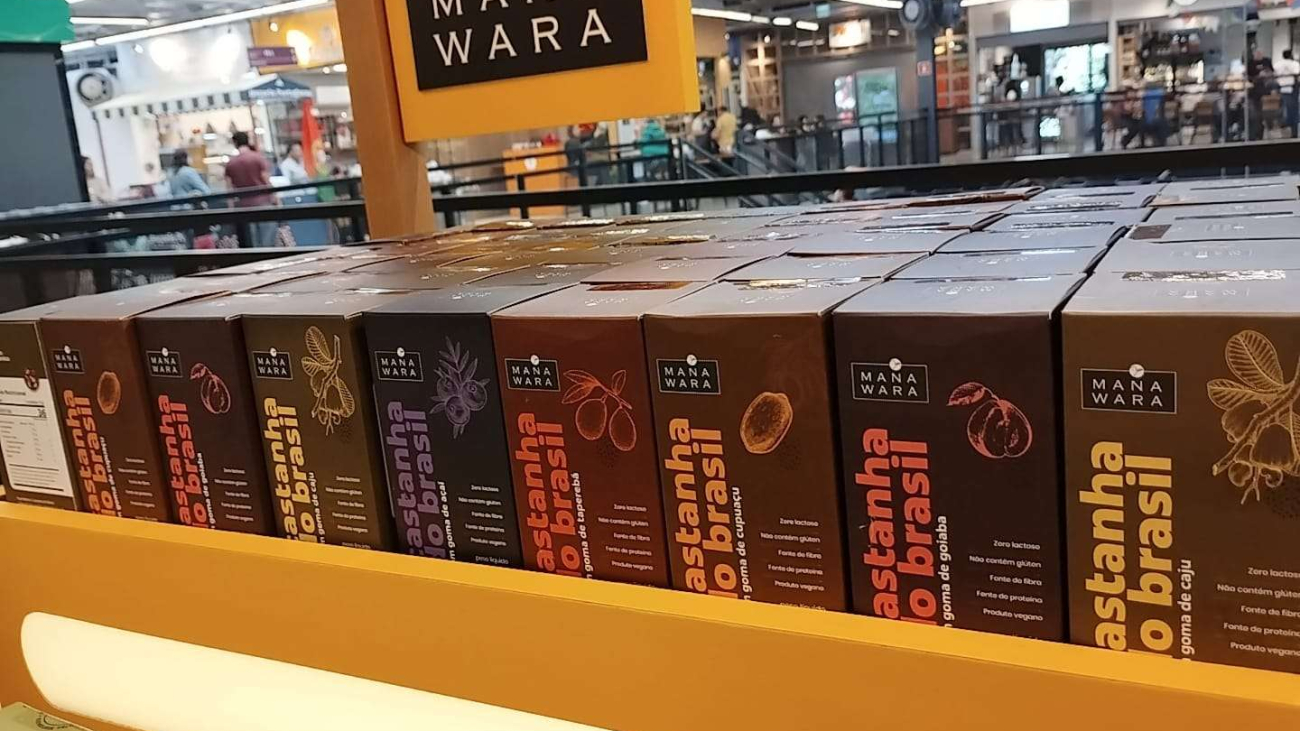
After opening two franchises – one in Manaus and another in São Paulo – Manawara opened its third unit in Shopping Osasco, in the city of Osasco, in the Metropolitan Region of São Paulo.
The unit is part of a series of franchises scheduled to open by the end of 2024. Two others should open later this year, between May and June: at Shopping Pátio Paulista, in the capital of São Paulo, and in Manaus, at Amazonas Shopping .
More units are also planned for the year in São Paulo, Rio de Janeiro and Belo Horizonte. The point of sale in the capital of São Paulo, opened in mid-2023, remains in operation and also functions as a showroom to attract future franchisees.
Mércio Sena, CEO of the company, highlights that Manawara should deliver 10 franchised units this year, with the firm intention of expanding access to Amazonian flavors. The franchise model offers more than 20 products, including fruit candies of different flavors, nuts and cookies. Foods such as açaí, guaraná, taperebá and cupuaçu are present in jujubes and other vegan products, free of gluten and lactose. And it plans to close the year 2024 with 15 new products.
In its production chain, Manawara seeks to value producers from the Amazon region. The guaraná used comes from Maués, the nuts come from Assoab (Association of Farmers of Beruri), which operates in Resex Mamirauá. The starch in the cookies comes from Iranduba, the honey from Boa Vista do Ramos, the coconut flour from producers in Acre.
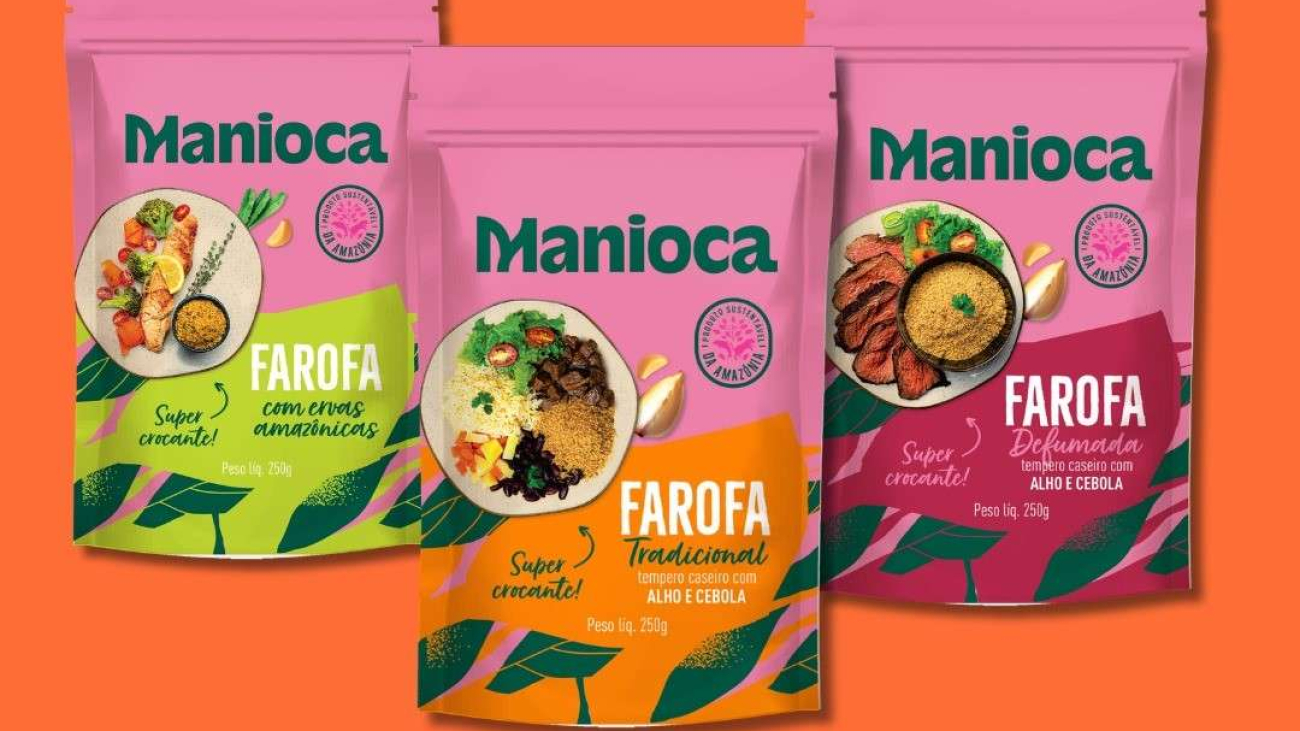
Manioca has just launched a new line of products: farofas. The novelty hits the market in three flavors: traditional, smoked and Amazonian herbs.
The main differences of the products, according to the company, are the flavor, grain size and crunchiness, originating from ancestral techniques from the region.
In addition to genuinely Amazonian yellow cassava, the farofas feature local ingredients that give a unique aroma and flavor to each of the versions offered: the traditional one has a touch of puxuri, a spice that replaces nutmeg, with a slight mentholated touch; the smoked one has cumaru, an aromatic seed known as Amazonian vanilla, which provides a light sweet touch, combining perfectly with the smokiness of its seasonings; the Amazonian herbs store presents consumers with alfavaca and chicory from Pará, herbs always used in pairs in several traditional dishes from the region.
The products will be on sale in supermarkets and emporiums across the country in 250g packages and promise to bring more flavor to Brazilians' tables.
Ingredients of Amazonian origin
The cassava used in its production is cultivated by two traditional communities in the municipalities of Moju and Acará, both in Pará, who receive technical assistance and training offered by Manioca and partner NGOs to carry out management organically and without harming the environment and its producers, ensuring quality and sustainable ingredients.
For nine years working to improve products made from cassava and with the production of farofa, Manioca is now using the food in its entirety. The starch is used in tapioca flour and pepper sauce, the liquid is transformed into tucupi vegetable broth and black tucupi sauce, Amazonian soy sauce, and now the dough becomes farofa.
Space demarcates indigenous territory in the capital of Rio de Janeiro as platform for indigenous arts in Brazil and its creators
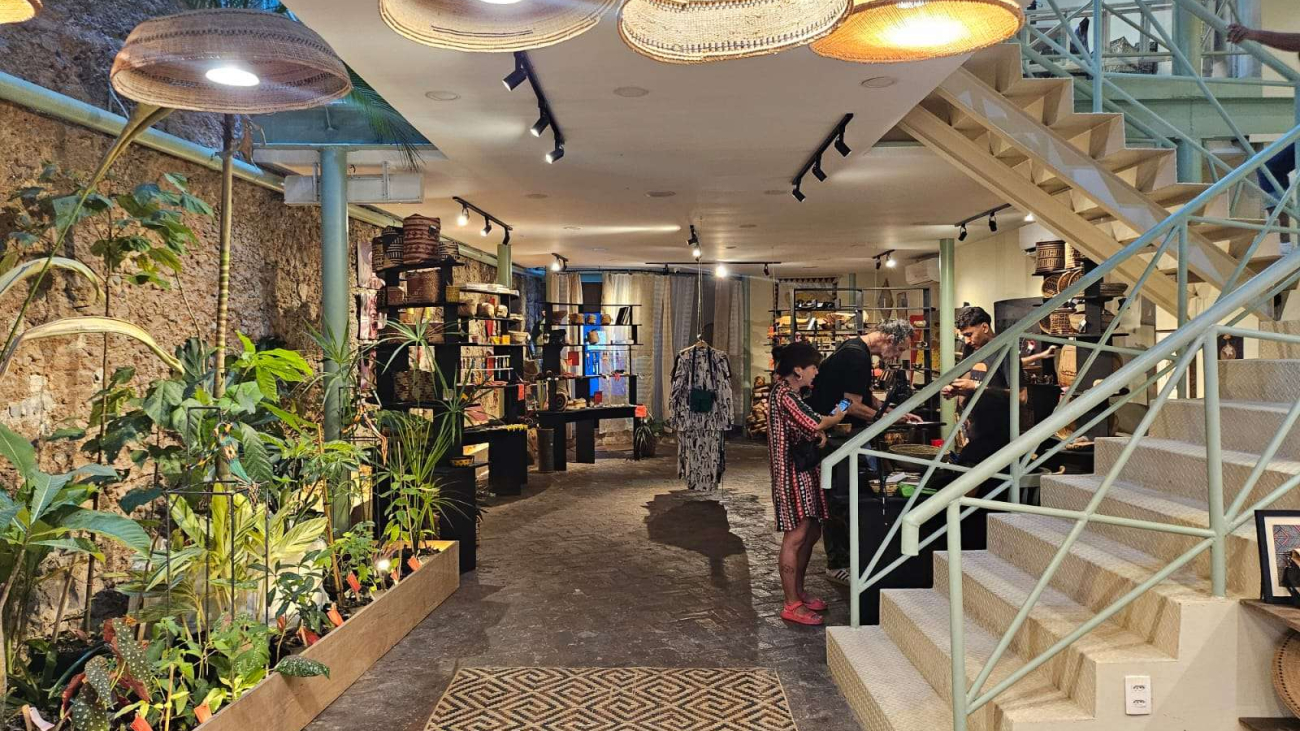
Tucum opened Casa Tucum in the city center of Rio de Janeiro (Rua do Rosário nº 30). More than a space for commercializing indigenous art and crafts from different parts of the country, the place is a cultural center that demarcates territory in the heart of the capital of Rio de Janeiro, being a space for resistance and encounter with indigenous culture, for dialogue and construction permanent.
The House was opened to the public on 19/04, Indigenous Peoples' Day, with an extensive program that included maraca and snuff circles, singing, traditional ceremonies, presentation of the house's artistic curatorship, musical performances, exhibition opening, conversation, storytelling, body painting, workshops, and continued until the end of the month with the participation of indigenous people of different ethnicities.
Leaders, experts and artists from different peoples were present to celebrate and reaffirm Brazil's indigenous arts as a tool of struggle.
The purpose of the space is to disseminate and value the diverse original narratives, promote decolonial ideas and reforest the minds of visitors. In addition to permanent cultural activities, Casa Tucum sells indigenous arts from different regions of the country.
“It was a dream come true. It was a very strong moment, an ancestral force that was formed, was present inside the house, and we actually demarcated this territory with the presence of these relatives there. The House will be a space for people to get closer to the reality and culture of our partners. A space to reaffirm the arts and indigenous peoples of Brazil”, analyzes Amanda Santana, founding partner and creative director of Tucum.
Casa Tucum is part of the Rio City Hall's Reviver Cultural project, which aims to revitalize the city center through cultural spaces.
Accelerator seeks businesses that generate positive impact for the Amazon for acceleration journey and investment of up to R$ 400 thousand
Businesses that generate a positive impact on the Amazon, contributing to keeping the forest standing and at the same time generating income for the region's populations, are on the company's radar. AMAZ impact accelerator.
Registration for the 2024 Business Call is open until 12/04 with the aim of finding startups and innovative businesses to be accelerated and receive investment of up to R$ 400 thousand.
Interested parties can register and find out the full rules of the initiative on the page amaz.org.br/chamada2024.
AMAZ seeks businesses that generate a positive impact in the rural and forestry regions of the Amazon, have a product or service already tested on the market and operate or plan to operate in the region.
Startups and companies that are developing impact businesses aimed at forest conservation, biodiversity conservation and socio-environmental development in the Amazon can register.
Initiatives that are already developing activities in a practical and operational way will be considered: prototype developed, in the market test phase; tested product, in the market launch phase; or product launched, in the fundraising or expansion phase.
Sustainable businesses are expected in the following sectors: agriculture, livestock and sustainable rural production; sustainable forest management and production; socio-biodiversity products; reforestation and agroforestry production; sustainable and community-based tourism; food, cosmetics; crafts and sustainable fashion, logistics, communication and financial services; technologic solutions; marketing and market access platforms; education and entrepreneurship with socio-environmental impact; mitigation and adaptation to climate change; carbon and other socio-environmental products and services; treatment of solid waste/pollutants and improving access to water for rural and riverside communities.
In other words, businesses that generate solutions to the main social and environmental problems in the Amazon, seeking to conserve or recover forest areas, value knowledge and biodiversity, generate income and quality of life for rural and riverside communities.
Among the benefits offered by AMAZ are:
Impact thesis development and business modeling
Workshops and facilitation workshops on topics such as management and impact assessment, market strategies, marketing and communication, logistics, etc.
Mentoring and monitoring program
Legal and accounting advice specialized in impact businesses
Communication consultancy
Knowledge and management support with follow-up
Scholarship and Small Support Program
Access to AMAZ's network of investors and partners
“Our expectation for the Call in 2024 is not only to be able to evaluate businesses and learn about interesting businesses that have the purpose of impacting the Amazon, but also to support and facilitate the path to a possible future investment for all businesses. And this involves both the acquisition of knowledge and maturity regarding what is the minimum necessary to carry out this fundraising and even a more advanced business modeling, which includes impact as an important asset”, analyzes Rafael Moreira Ribeiro, responsible for the selection and acceleration of AMAZ.
THE AMAZ impact accelerator is coordinated by Idesam (Institute for Conservation and Sustainable Development of the Amazon), and has a hybrid financing fund (blended finance) of R$ 25 million for investment in impact businesses over the next five years, the first focused exclusively on the region.
Its founders and strategic partners are Fundo Vale, Instituto humanize, ICS (Instituto Clima e Sociedade), Good Energies Foundation, Fundo JBS pela Amazônia and PPA (Plataforma Parceiros pela Amazônia). It also has a wide network of partners such as Move.Social, Sense-Lab, Mercado Livre, ICE, SBSA Advogados, Climate Ventures and private investors.
Endeavor's Scale Up program, which drives companies through a personalized acceleration journey, in direct connection with a network made up of major entrepreneurship references in Brazil, selected Mahta, a company in the AMAZ portfolio, for the first cycle semester of 2024. The program is the gateway to becoming an Endeavor network entrepreneur.
“Almost all of the best startups in Brazil were part of Endeavor's Scale Up program. Then, in the future – you need to grow a lot for this – companies go through a filter, which is global, and only around 10 or 15 in the world, usually two or three from Brazil, effectively become Endeavor entrepreneurs. Brazil today has ten unicorns, and nine are from Endeavor. In this Scale Up cycle, Mahta is the only consumer products company. As the main criteria for evaluating and approving the program are results, growth and, especially, growth potential, most startups are made up of fintechs, puretechs (pure technology) or B2B, the focus of much of the investment. We were an exception, which for us is a double honor,” analyzes Max Petrucci, founding partner of Mahta.
Petrucci, who has even been a mentor at Endeavor for a decade, highlights the importance of this moment for Mahta: “Being part of this process is very important for us, especially because of the endorsement. Being selected among the best 40 startups in Brazil is incredible. And we are proud to be at Endeavor and to be part of AMAZ. A bridge that we can even help build, because today these two universes are far apart. The reality of the Endeavor entrepreneur is very different from the reality of the AMAZ entrepreneur, and vice versa. Both initiatives are very good, and I hope we can generate closer ties between these two worlds”, he adds.
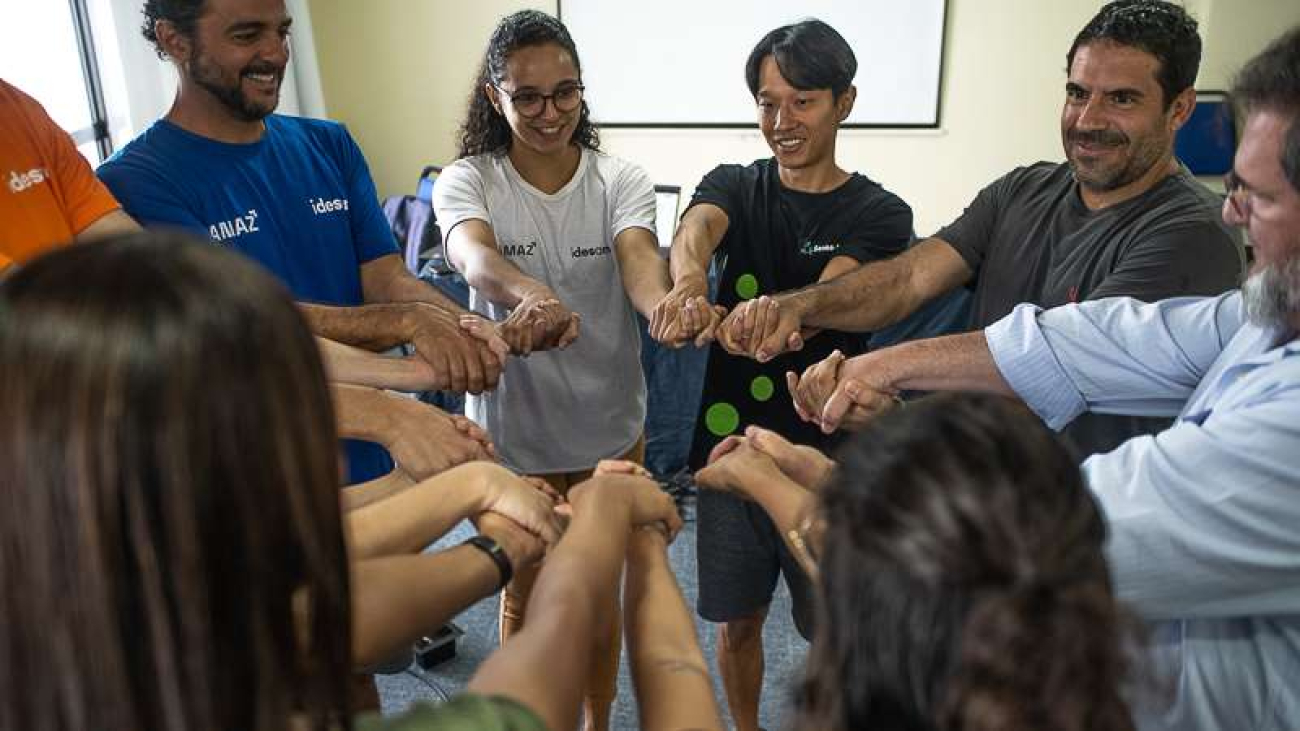
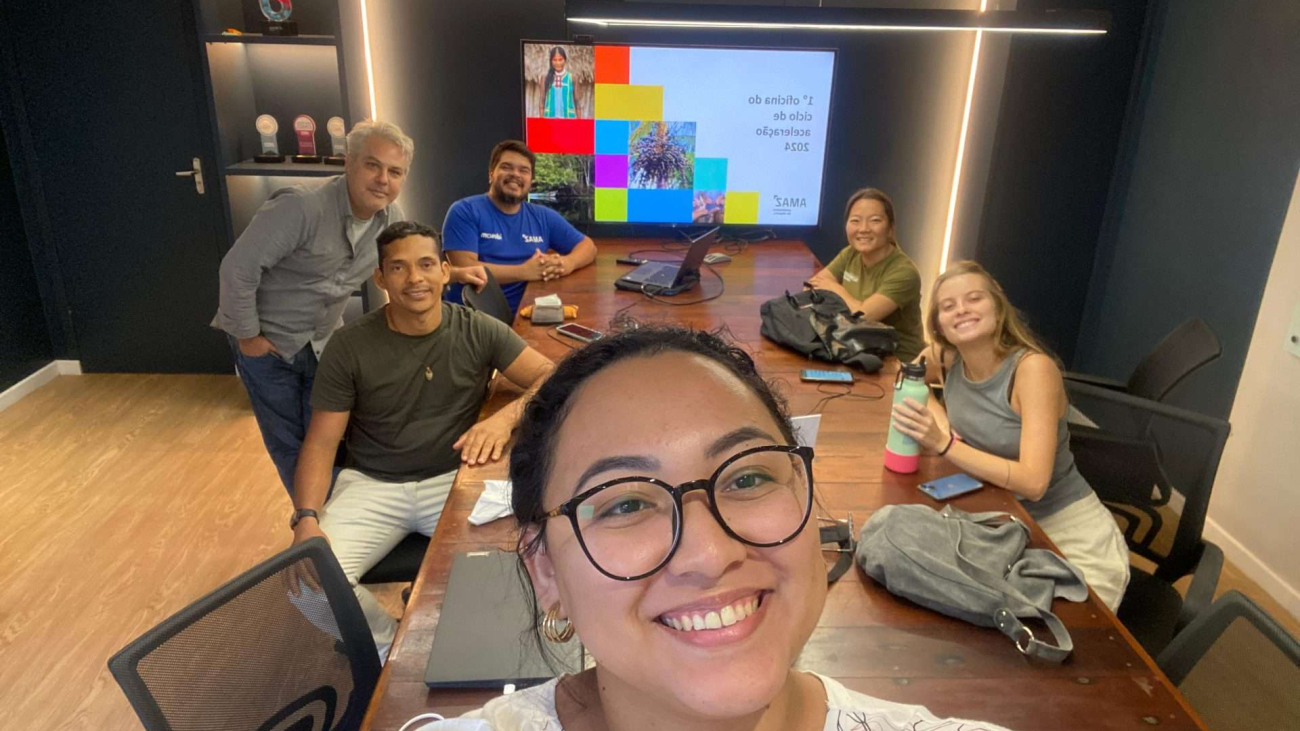
The first workshop of the AMAZ 2024 acceleration cycle took place from 21 to 23/03 and brought together, in Manaus, the businesses selected by last year's Call: MOMA and Zeno Nativo.
The program covered indicator management and impact modeling, including the financial aspect. In addition to the AMAZ team, the entrepreneurs were attended by Sara Sampaio, Executive Director of Café Apuí Agroflorestal, who shared the management of business indicators and the decision-making process.
Visits to other businesses based in Manaus – Na'kau, which is part of the AMAZ portfolio, and Warabu -, and also to Bemol Distribution Centers completed the activities.
“This first workshop of the 2024 acceleration cycle aimed to work with the notion of how data can be transformed into important information for business decision-making. We brought theoretical aspects, as well as construction and refinement of business financial indicators, work that will be continued over the next few weeks”, highlights Rafael Moreira, responsible for the selection and acceleration of AMAZ.
Rafael also highlights the importance of connections with other businesses operating in the Amazon, with the possibility, for accelerating entrepreneurs, of realizing different levels of knowledge organization, and approaching possible commercial points for both businesses.
For Vivian Chun, from MOMA, the highlight of the workshop was the demonstration of robust impact reporting benchmarks: “This was inspiring, as was the visit to the Bemol Distribution Center, which is quite impressive and gives a dimension of grandeur. when dealing with so many brands.” MOMA is in the process of expanding its B2B strategy, and contact with commercial spaces with the potential to sell products was an important point of this first face-to-face meeting conducted by the AMAZ team.
“Acceleration provides extremely valuable networking. And it contributes to my entrepreneurial journey, bringing a lot of reflection and encouragement for MOMA to grow. Each acceleration that we participate in is a different process, because we are always at different phases of the business and maturity. So this process with AMAZ brings some pulses, guiding questions to reflect on whether what we are doing will have results and when, whether we are certain of our purpose, anyway. Provocations for us to improve more and more.”
Zeno Gemaque, from Zeno Nativo, highlights the lessons learned from the examples: “The work of Café Apuí Agroflorestal really caught my attention. I saw that it's not just us who have difficulties, they also face many challenges similar to ours. And that gives us hope, because we saw a project similar to ours that is working. The work with financial modeling was also extremely important. I also leave with many doubts and questions, but I know that we will address them in the next online connections with the AMAZ team. All of this contributes greatly to our growth. We learned a lot that we will apply here at Zeno Nativo.”
Coi Belluzzo, also from Zeno Nativo, echoes the importance of the connection with Café Apuí Agroflorestal and other businesses: “The visits we made to the entrepreneurs at Na'kau and Warabu, both involved in Amazonian cocoa, were very important for us . These visits will certainly bear fruit for us. It was a very intense week of work, with a lot of information to digest and apply to the business.”
We use cookies to ensure that we provide the best experience on our website. If you continue to use this site, we will assume that you are satisfied with it.